
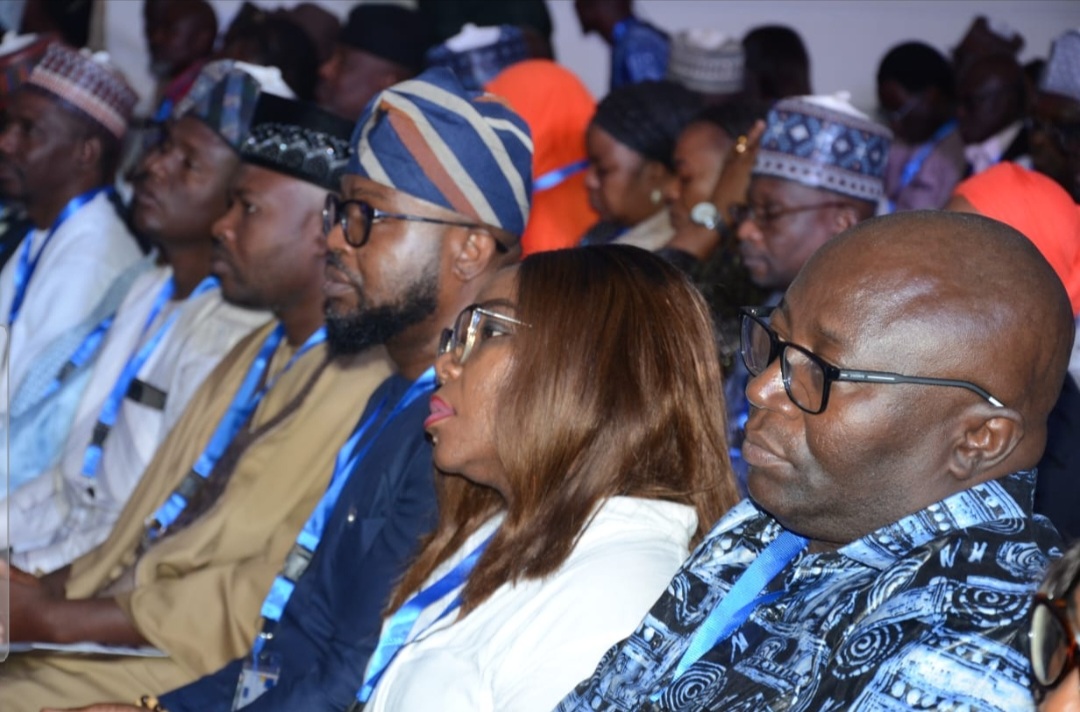
The future of Nigeria’s civil society hangs in the balance as leaders warn of outdated laws, poor governance, and inconsistent regulations, calling for an urgent review of the Social Development Act to prevent the sector’s collapse. This critical message emerged from the two-day National Summit on Repositioning the Social Development Framework, organised by the International Institute for Democracy and Electoral Assistance (International IDEA) and funded by the European Union through its CSOs-Bridge Strengthening Project, writes Chidinma Iroegbu
Nigeria’s civil society community is raising its loudest alarm in years, warning that a combination of fragmented laws, weak internal governance, and outdated national frameworks is placing the entire sector at risk. From questions of legal identity to gaps in social protection laws, stakeholder after stakeholder is pointing to the same conclusion: unless Nigeria urgently overhauls its regulatory ecosystem and CSOs strengthen internal discipline, the civic space may continue to shrink, leaving millions of vulnerable citizens without essential support.
This concern echoed strongly at a series of recent engagements involving civil society leaders, government officials, and international partners. Speakers described a civic environment that has become increasingly complex—populated not only by traditional NGOs but also digital activists, informal networks, cooperatives, WhatsApp communities, and spontaneous social movements. Yet, while the actors have evolved, the laws meant to guide them have not.
During one of the sessions, Mr Harry Udoh, Team Lead of the Ethics and Good Leadership Awareness Initiative (EGLAI), effectively captured the urgency of the moment. Civil society, he said, “remains the bridge between communities and policymakers,” often filling critical governance gaps in underserved areas. Without strong and coordinated networks, he cautioned, Nigeria would be “far worse off.” However, he lamented that many civic actors operate within a regulatory vacuum, relying on state or local government registration that does not confer legal identity and exposing them to serious risks.
This vulnerability was underscored by Amaka Biachi of the Abia Civil Society Network, who warned that relying solely on local government registration could leave organisations open to scrutiny from the EFCC and other regulators. Proper Corporate Affairs Commission (CAC) registration, SCUML compliance, and complete documentation, she stressed, are essential for safe and credible operations. Her concerns resonated particularly among smaller, grassroots organisations that often assume local certificates provide adequate legal cover.

Others noted that internal weaknesses within CSOs have also contributed to the sector’s fragility. Reverend Adebolanuga of Lagos highlighted poor governance, questionable practices, and declining operational standards in parts of the sector—factors that have eroded public trust and led to government crackdowns. “When CSOs discipline themselves, they gain the moral authority to challenge overbearing regulation,” he argued, urging stronger coordination and mutual respect between civic actors and government agencies.
The conversation expanded from organisational gaps to structural national challenges during the National Summit on the Social Development Act (SDA), convened by International IDEA with support from the European Union under the EU CSO-Bridge Strengthening Project. Stakeholders at the gathering unanimously agreed that Nigeria’s Social Development Act—first conceptualised in the 1970s and last enacted in 2004—no longer reflects the country’s realities.
Enugu State Commissioner for Children, Gender and Social Development, Hon. Valentina Enih, was blunt in her assessment. “The Act is older than many of us,” she said, describing its provisions as outdated in the face of rapidly evolving social challenges. She called for unity within the civil society sector, emphasising that collective action—not fragmented advocacy—would produce meaningful reforms. “One stick is easily broken, but a bundle of broomsticks is not,” she noted.
For Idem Akpan Udoekong, Project Manager of the EU-Strengthening Bridge Project, the summit served as an overdue attempt to revive national attention on an Act that has long suffered from neglect. He highlighted the critical roles CSOs play in education, healthcare, gender response, civic values, and community development—particularly glaring in communities where government presence is minimal. Updating the SDA, he added, would also enhance coordination around gender-based violence and other social protection priorities, especially as the summit coincided with the global 16 Days of Activism campaign.

At the legislative level, Chairman of the House Committee on Civil Society Organisations and Development Partners, Hon. Victor Obuzor, confirmed that the National Assembly has begun reviewing the SDA. He pointed to fragmentation, institutional realignments, and overlapping regulatory frameworks as obstacles that have weakened the Act’s effectiveness over time. The Assembly, he assured participants, is committed to developing a modernised civil society regulatory bill aligned with current needs.
Officials from the executive branch supported this stance. Deputy Director at the Ministry of Humanitarian Affairs and Poverty Reduction, Peter Audu, affirmed that proposed reforms align with broader government efforts to enhance gender equality, social protection, and national cohesion. “This forum provides an important opportunity to consider proposed amendments and develop a national coalition for sustainable financing and measurable results,” he said.
Yet stakeholders warned that reform must go beyond updating the law—it must also embed inclusion and responsiveness. Dr Fumi Akinyele, CEO of the Accountability and Transparency Initiative, highlighted the exclusion of rural women from many social protection schemes due to barriers such as digital literacy, banking requirements, and access to smartphones. A reformed SDA, she argued, must incorporate gender-responsive budgeting, disaggregated data, and more precise definitions to ensure that no one is left behind.

Sub-national CSOs echoed these concerns. Prince Chris Azor, Chairman of the Anambra Civil Society Network, recounted instances where inconsistent regulations had led to the closure of community organisations’ bank accounts. He urged the updated Act to provide states with a unified legal framework that protects civic space and guarantees community participation in governance.
Returning to the broader debate on civic space, Mr Henry Onyebuchi Nworie, Permanent Secretary of the Ebonyi State Ministry of Human Capital Development and Monitoring, warned that Nigeria’s civil society ecosystem suffers from misalignment across institutional structures and responsibilities. He cited weak data systems, scattered funding mechanisms, gaps in vulnerability inclusion, and the absence of a unified disaster-response structure. As part of a way forward, he proposed a sector-led independent governance body—an ombudsman of sorts—to enforce standards and discipline bad actors if the government fails to create one.
In closing, Udoh reiterated that regulation is inevitable, but it must empower rather than suffocate the sector. Self-regulation—through thematic networks, minimum standards, codes of conduct, and transparent information sharing—remains the surest path to safeguarding credibility and sustainability. Only through internal discipline and sector-wide coordination, he emphasised, can civil society maintain its vital role as a bridge between citizens and government.
What emerged from all these engagements is a sector at a crossroads. Nigeria’s civil society is both indispensable and deeply vulnerable. Fragmented laws, outdated national frameworks, weak governance, and the looming threat of restrictive regulation present urgent challenges. Yet, with proactive reforms, renewed collaboration, and robust self-regulation, stakeholders believe the sector can rebuild trust, strengthen legitimacy, and continue to drive inclusive development across the country.