
Summary
•As new testimonies emerge from Mali’s refugee camps, harrowing stories of torture, executions, and mass intimidation point to a widening pattern of abuses linked to Russian mercenaries now operating under the Africa Corps banner.
•Survivors fleeing to Mauritania are recounting chilling encounters with Russian fighters accused of public executions, suffocation, waterboarding, and the killing of entire families—raising fresh questions about Mali’s security alliance with Moscow.
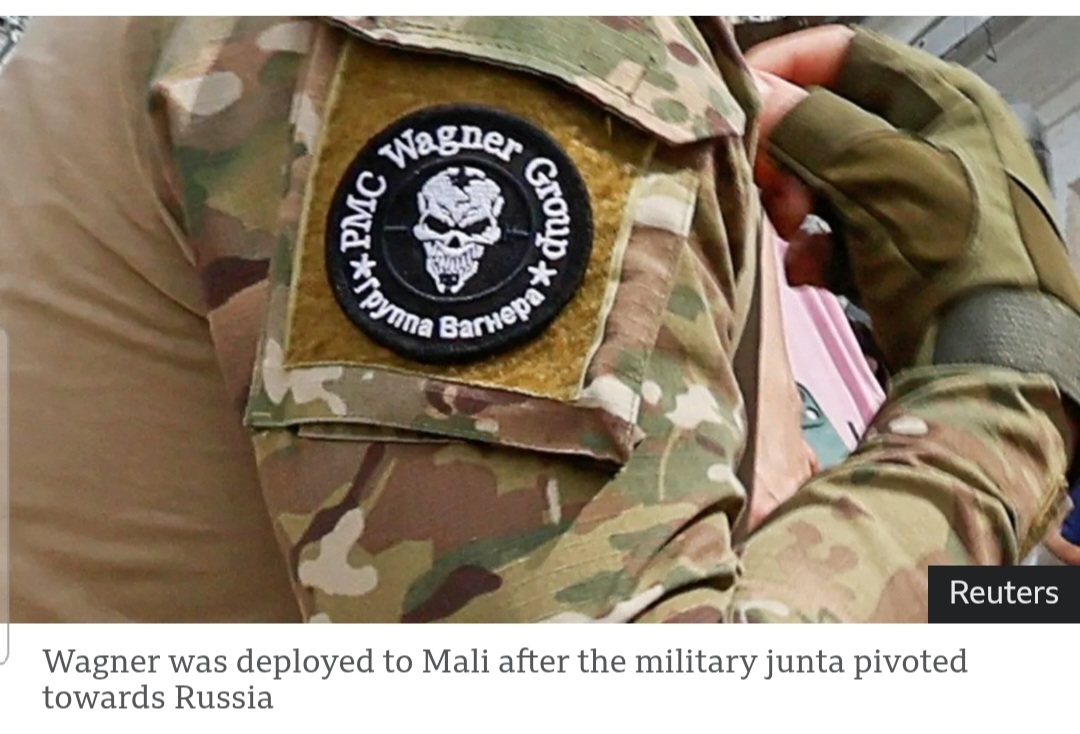
•Despite rebranding from Wagner to Africa Corps, Mali’s military partners from Russia continue to face damning allegations of torture and civilian killings. Those who escaped narrated their ordeals of a war without rules.
•Their stories are disturbing, their experiences unspeakable. But from the M’berra refugee camp, Mali’s displaced are breaking their silence on the brutality they say was unleashed by Russian mercenary forces.
•Behind Mali’s worsening insecurity lies a darker truth: civilians say they are being hunted, tortured, and executed by Russian mercenaries operating alongside the junta. Drawing on BBC reports and further investigations from sources, Global Sentinel examines the testimonies fueling global alarm.
By Oumarou Sanou
New facts have emerged about the scale of atrocities allegedly committed by Russian mercenaries in Mali, as survivors who fled the violence are now recounting harrowing experiences of torture, public executions, and mass intimidation. Their testimonies, gathered in Mauritania’s M’berra refugee camp and corroborated by independent investigations, paint a grim picture of escalating abuses since Mali’s military junta deepened its security partnership with Moscow.
According to reports from the BBC, the fighters, formerly linked to the Wagner Group and now absorbed mainly into Russia’s Africa Corps, are accused of carrying out brutal counter-insurgency operations that have disproportionately targeted civilians in central Mali. Despite the change in branding, survivors argue that the methods remain unchanged—marked by arbitrary arrests, suffocation, beatings, mutilations, and summary executions.
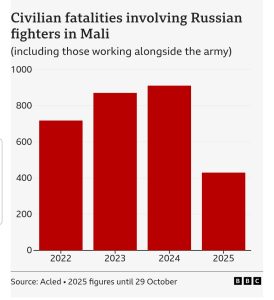
One of the most disturbing accounts concerns a November 26 Africa Corps operation in which at least 10 civilians were reportedly killed, including four who were burned alive. The victims included women, children, and men, underscoring the indiscriminate nature of the violence. Witnesses describe a pattern in which civilians are routinely treated as enemy combatants, leaving entire communities terrorised.
Dozens of testimonies collected by humanitarian agencies reveal consistent patterns of abuse. Survivors recount being waterboarded, beaten with metal rods, suffocated with exhaust fumes, electrocuted, and forced to watch public executions. In several cases, captives were shown the bodies of victims or made to touch freshly spilt blood as a form of psychological torture.
Ahmed, a shopkeeper from Nampala who fled to Mauritania, described his ordeal after he was accused of having ties to jihadists. Abducted from his shop in August 2024, he says Russian fighters stripped him, plunged his head repeatedly into a water tank until he lost consciousness, and threatened to behead him if he refused to implicate his employer. Held in a toilet block alongside dozens of other detainees, he witnessed two men—an Arab and a Tuareg—beheaded before his eyes. “It gives me nightmares. I don’t know if I will ever return home,” he said.
Other refugees echo similar stories. Bintu, a mother of five, said her husband was shot and dumped in a river. “When I hear the name Wagner, I feel traumatised,” she said. Another survivor, Youssouf, recalled being ambushed by Russian fighters while herding cattle. He and his friends were tied up, beaten, and tortured with exhaust fumes; one did not survive.
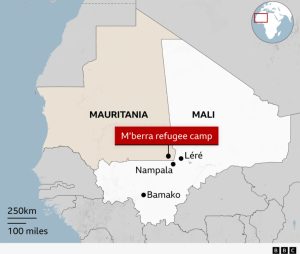
Survivors also describe mass detentions that appear designed to intimidate entire populations. In one incident, mercenaries surrounded Nampala and its neighbouring communities, forcing hundreds of residents onto a football field, where they witnessed executions and were threatened with shovels and pickaxes. One man accused of using a satellite phone was reportedly nearly drowned in a barrel of water in full view of the crowd.
These accounts align with investigations by the European Council on Foreign Relations (ECFR), The Africa Report, and other monitoring groups, which found evidence that Wagner operatives had previously shared hundreds of graphic photos and videos of killings, torture, and mutilations on private Telegram channels. Although many of these pages were shut down in 2024, analysts say they reflect a long-standing culture of impunity that has merely shifted into Russia’s Africa Corps structure.
Research organisations warn that while Africa Corps may present a slightly less “predatory” public posture than its Wagner predecessor, widespread human rights violations continue unabated. Reports include electrocution, simulated drowning, forced disappearances, sexual violence, and the killing of at least 12 Peul men, along with the disappearance of more than 80 others. Analysts argue that civilians remain the primary victims of what is framed as a counter-terrorism campaign.
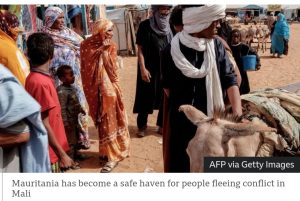
The violence has triggered a large-scale exodus. Nearly 50,000 Malians have fled to Mauritania, according to the United Nations, with the M’berra camp now grappling with an influx of traumatised families. Aid workers say the testimonies share striking similarities—indicating systematic patterns rather than isolated abuses.
Human rights experts argue that the crisis raises broader concerns about the deteriorating security landscape across the Sahel, where a wave of military coups and shifting geopolitical alliances has empowered foreign mercenary groups. Mali, Burkina Faso, and Niger have increasingly turned to Russia for security assistance, even as evidence continues to surface linking Russian forces to civilian deaths and widespread violations.
As survivors try to rebuild their lives across the border, many say their greatest hope is accountability. “I want them to face justice one day,” Ahmed said quietly, recounting how he once dug a shallow grave for himself after being threatened with execution. Others question how long the international community will allow the cycle of terror to continue. As one refugee asked, “If these testimonies exist, and this violence persists even after the name change, how much longer must Mali endure before the world takes responsibility?”