
Goodness Anenih
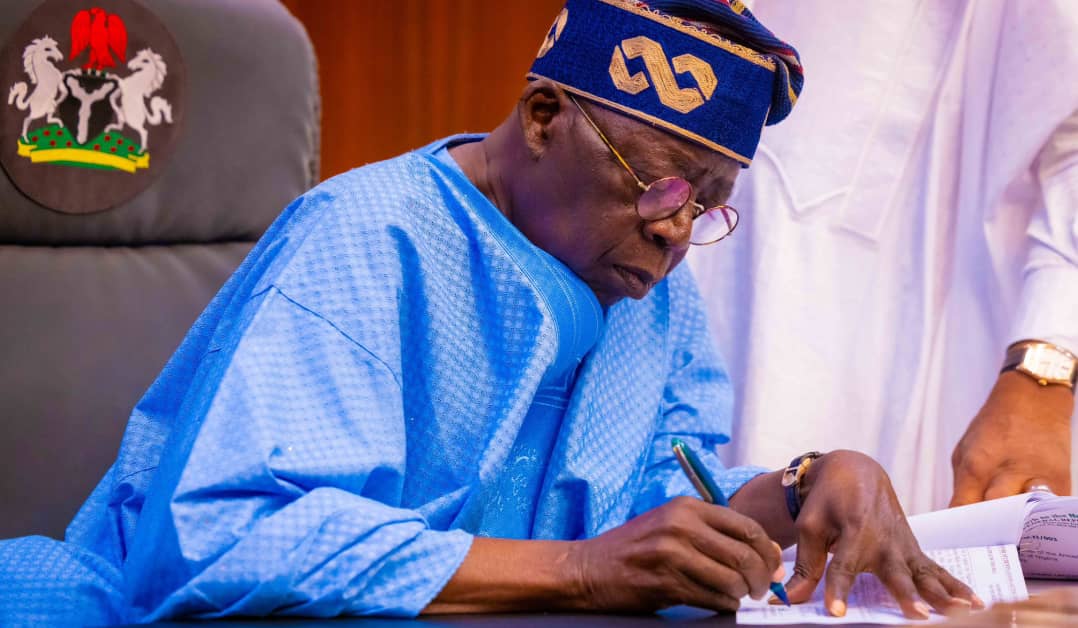
President Bola Ahmed Tinubu has signed into law the Electoral Act, 2022 (Repeal and Re-Enactment) Bill 2026, setting the legal framework for Nigeria’s 2027 general elections amid sharp divisions within the National Assembly over the contentious issue of result transmission.
The re-enacted legislation, passed after months of legislative scrutiny, is expected to recalibrate the nation’s electoral architecture. However, its final passage was overshadowed by intense debates on whether electronic transmission of results should remain sacrosanct or subject to exceptions.
At the heart of the controversy was Clause 60, which prescribes procedures for the electronic transmission of election results while introducing conditions under which manual transmission may be permitted in cases of network failure.
In the Senate, tensions flared when Senator Enyinnaya Abaribe demanded a formal division on Clause 60(3), objecting to the proviso that allows a fallback to manual transmission. He argued that any ambiguity could erode public confidence in the electoral process.
Senate President Godswill Akpabio ruled that the matter had been sufficiently addressed in earlier proceedings, but opposition lawmakers resisted the position, triggering heated exchanges across the aisle.
Deputy Senate President Barau Jibrin invoked relevant provisions of the Senate Standing Orders to justify the leadership’s handling of the clause, further deepening partisan fault lines within the chamber.
When the division was eventually called, 55 senators voted to retain the proviso permitting manual transmission under specific circumstances, while 15 voted against it, underscoring the minority’s insistence on a strictly electronic framework.
Earlier, the Senate had dissolved into the Committee of the Whole to reconsider aspects of the bill after a motion to rescind previous amendments was adopted, paving the way for a clause-by-clause re-examination that reopened settled arguments.
A parallel drama unfolded in the House of Representatives, where lawmakers clashed over a motion to revisit earlier provisions mandating real-time electronic transmission of results to the IReV portal. Protests on the floor culminated in an executive session to douse tensions.
With presidential assent now secured, the revised Electoral Act will govern future polls, even as lingering questions persist over the delicate balance between technological innovation and procedural safeguards in Nigeria’s evolving democratic journey.