
By Oumarou Sanou
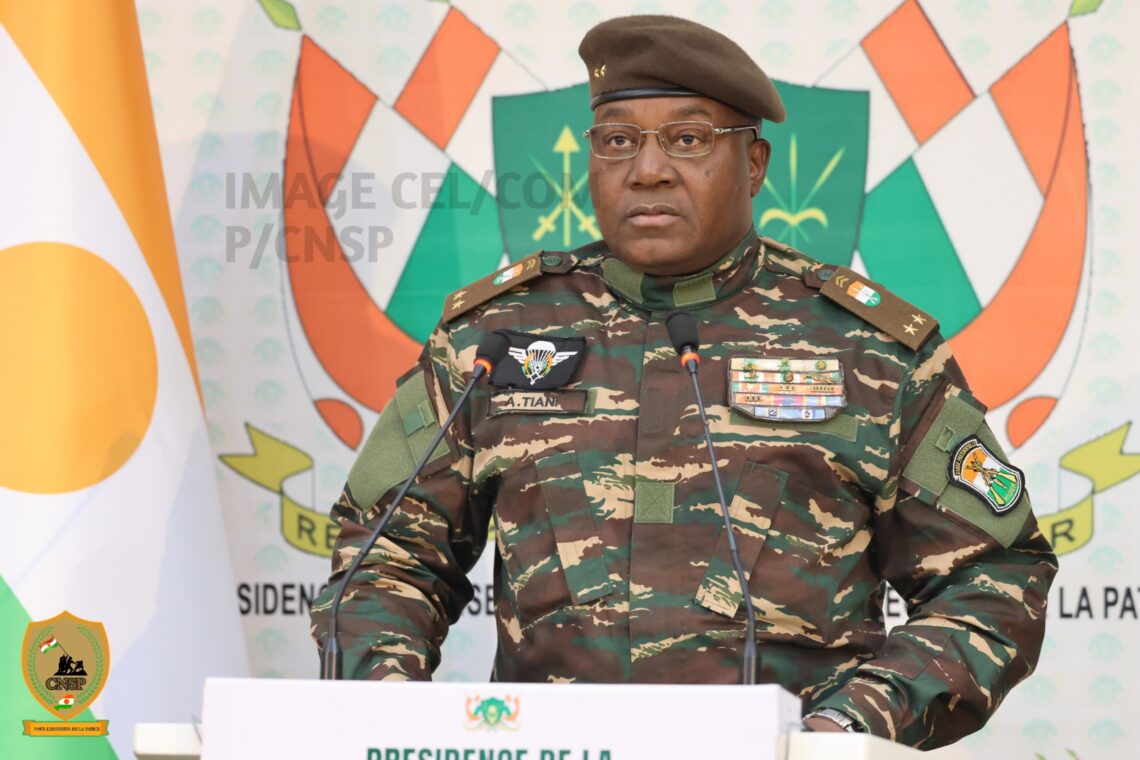
The attempted mutiny in Niger has exposed something more consequential than a challenge to General Abdourahamane Tiani’s three-year-old military regime. It has revealed the widening gap between the junta’s rhetoric of sovereignty and its dependence on foreign security partners, while raising uncomfortable questions about the Alliance of Sahel States (AES) and Russia’s growing role in protecting the regime rather than the state.
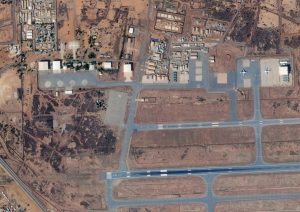
On the night of 28-29 August 2026, Niamey was plunged into turmoil as mutinous soldiers, reportedly including young officers from units associated with Ouallam, Téra and Dosso, attacked strategic positions around the capital. Their targets included Air Base 101 within the Diori Hamani International Airport complex, the presidential palace and the headquarters of the state broadcaster. The mutineers briefly took control of the airbase, and television transmissions were disrupted. By the end of the confrontation, loyalist forces had regained control. Dozens of soldiers were reportedly killed or arrested, though precise circumstances and figures remain difficult to establish independently. More significant was the reported role of Russia’s Africa Corps in helping Nigerien forces retake Base 101, with Russian personnel reportedly providing ground and aerial support after the authorities requested assistance.
This deserves more scrutiny than triumphant declarations that the mutiny was defeated. The question is not simply who won the confrontation. It is what the circumstances of that victory reveal about Niger’s political and security order.
For three years, Tiani’s government has presented sovereignty as the foundation of its legitimacy. Western forces were expelled, France was rejected as a security partner, and the junta insisted that Niger would determine its own strategic choices. Yet when Nigerien soldiers turned against their leadership, the regime reportedly relied on foreign forces already stationed on Nigerien soil.
This does not, by itself, prove that Niger has surrendered its sovereignty to Moscow, nor should every Russian-Nigerien security arrangement be read as Russian control of the state. But it exposes a striking contradiction. If a foreign military presence is unacceptable interference when it comes from one geopolitical camp, but indispensable assistance the moment the regime itself is threatened, what does sovereignty actually mean? This was not an external invasion or a conventional jihadist assault. It was an internal military revolt, and the reported Russian intervention was directed not at an al-Qaeda or Islamic State-linked formation, but at Nigerien soldiers challenging the authorities.
The symbolism is hard to ignore: a foreign partner reportedly became decisive in protecting a government from elements of its own armed forces. This is where the distinction between regime security and national security matters. A state can survive while a regime grows more fragile, and protecting the government of the day is not the same as strengthening its institutions.
Indeed, the mutiny raises serious questions about the condition of Niger’s armed forces. Some of the soldiers involved were reportedly linked to areas heavily affected by jihadist violence. Niger continues to face attacks from groups linked to al-Qaeda and Islamic State, and its military has suffered significant casualties. The unrest has exposed growing pressure and dissatisfaction within the ranks, creating a dangerous paradox: the junta took power in July 2023 partly by promising that military rule would restore security, yet three years later insecurity remains severe enough to threaten the cohesion of the very forces meant to defeat the insurgency. A government cannot indefinitely explain away battlefield failures as foreign conspiracy, nor can propaganda compensate for institutional weakness.
That is perhaps the wider lesson from this crisis. The information battle has become almost as important as the physical one, with governments, opposition groups and foreign actors using social media to shape competing narratives around legitimacy and sovereignty. Following the mutiny, accusations circulated linking Nigeria and ECOWAS to the attempted overthrow. Nigeria’s Ministry of Foreign Affairs categorically rejected this. In its 3 September 2026 statement, the ministry insisted Nigeria “did not and will never support any military coup or unconstitutional change of government,” describing the claims as false, and reaffirmed its commitment to the ECOWAS Protocol on Democracy and Good Governance and to regional peace and stability.
That clarification matters as an attempt to stop misinformation from further straining relations between Niger and its neighbours. But it also illustrates the limits of propaganda more broadly. Narratives can shape public opinion, mobilise supporters and reinforce a government’s legitimacy. What they cannot do is change the realities experienced by soldiers and civilians. A soldier facing repeated attacks does not become safer because a government describes the security situation as improving. A citizen does not become more secure because the state blames every problem on France, Nigeria or ECOWAS. An army divided by distrust does not regain cohesion through slogans about sovereignty.
The same principle applies to the AES. The grievances that drove Niger, Mali and Burkina Faso away from ECOWAS and their former Western partners should not be trivialised; Western interventions failed to produce lasting security, and public frustration with foreign influence was genuine. But strategic autonomy cannot simply mean swapping one external security dependency for another. The AES must eventually demonstrate that it can deliver what its members promised: stronger security, greater sovereignty and better governance. The Niger mutiny casts real doubt on that proposition, and exposes the cost of regional isolation. Niger’s withdrawal from ECOWAS has narrowed avenues for institutional cooperation precisely as insecurity spreads across borders that jihadist groups do not recognise. The threat facing Niger also threatens Nigeria, Benin, Chad, Mali and Burkina Faso.
This is why Nigeria’s restraint, rather than triumphalism, is commendable. Abuja should neither celebrate instability in a neighbouring country nor be drawn into a propaganda contest with Niamey. Its interests lie in a stable Niger, effective regional security cooperation and a return to credible constitutional governance.
Ultimately, the mutiny should force Niger’s rulers to confront a question propaganda cannot answer: can a regime that came to power through a coup build lasting legitimacy without addressing the political, institutional and security conditions that made military intervention possible in the first place? Russia may help protect the regime, the AES may offer political solidarity, and propaganda may shape the narrative. None can permanently substitute for legitimacy, institutional cohesion, democracy and security.
The real test of Niger’s sovereignty is therefore not how loudly it is proclaimed, nor how successfully foreign partners can defend the government. It is a question of whether Niger can build a state capable of defending its territory, protecting its citizens, maintaining the cohesion of its armed forces, and resolving political disagreements without repeatedly resorting to force. The mutiny has not ended Tiani’s rule, but it has exposed its vulnerability. Perhaps that is the most important lesson from Niamey: propaganda can defend a narrative, and foreign partners can defend a regime, but only legitimate institutions can sustainably defend a state.
Oumarou Sanou is a social critic, Pan-African observer and researcher focusing on governance, security and political transitions in the Sahel. He writes on geopolitics, regional stability and African leadership dynamics. Contact: sanououmarou386@gmail.com