
By Yechale Degu
Over the past two decades, Ethiopia has invested heavily on hydropower as a means to accelerate energy access, economic growth, and development and ensure control of its water resources. Though not without political costs affecting its diplomatic ties, hydropower was planned as a central pillar of the country’s energy security. Despite persistent domestic shortfalls in extending electricity to rural communities, the initiative has achieved notable success. Ethiopia has emerged as a regional hydroelectric hub, supplying power to nearly all neighboring states, with prospects for expansion beyond the region, generating significant hydro-dollar in return.
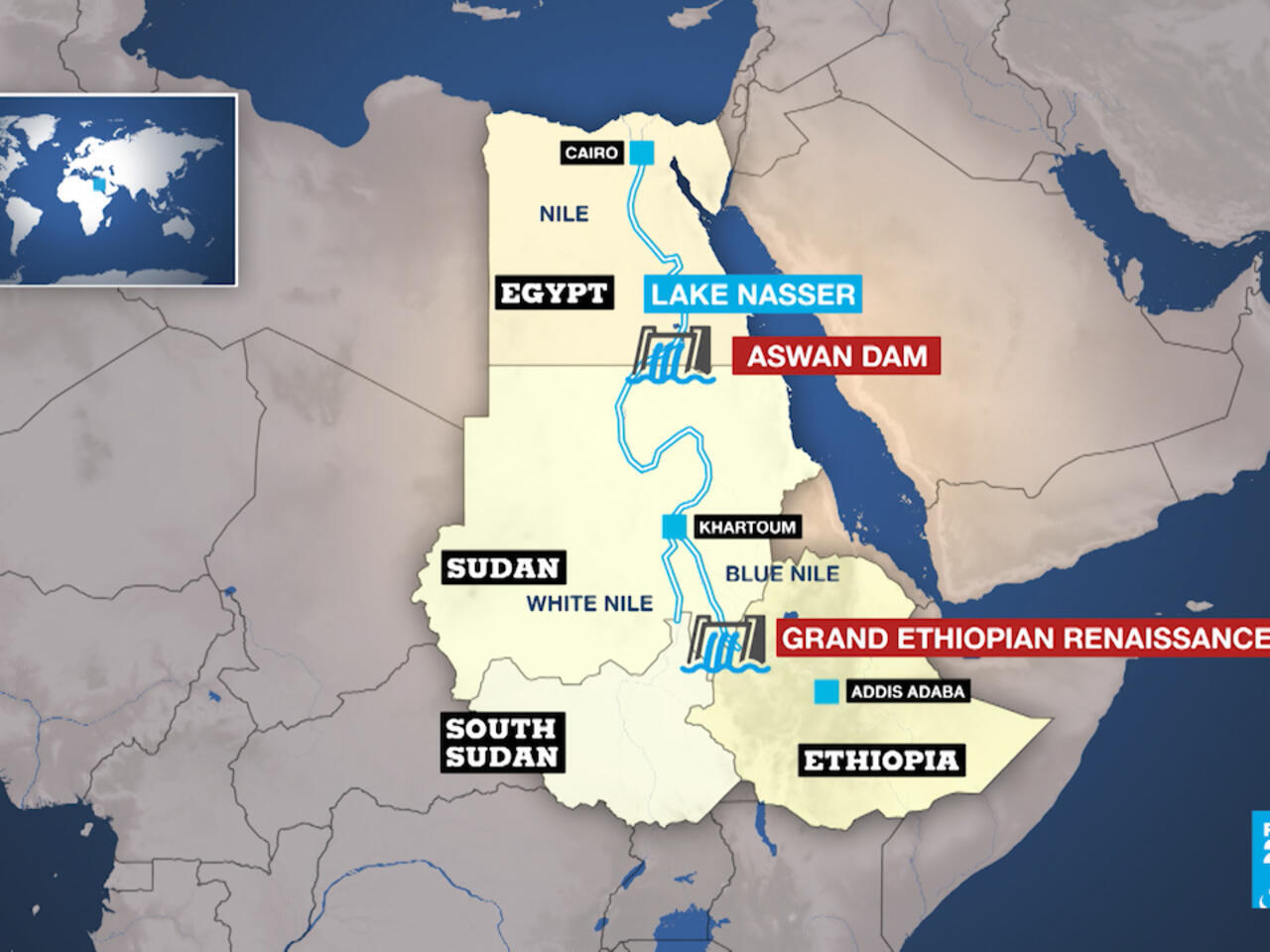
The hydropower strength more acquired following the completion of the Grand Ethiopian Renaissance Dam (GERD) represents a landmark achievement, overcoming colonial-era restrictions that limited upstream countries such as Ethiopia in managing their water resources. The dam’s completion, financed largely through domestic means, marked a breakthrough against financial constraints imposed by global financial architectures over financing of controversial projects like GERD. Withstanding sustained diplomatic challenges from Egypt, a country with deeper international entrenchment than Ethiopia, and its allies and organizations Egypt associated with such as Arab League/AR and Organization of Islamic Cooperation/OIC, Ethiopia emerge as a regional or continental hydropower. The dam becomes a new magna carta governing water relations for the future to come between Ethiopia and Egypt in particular and all Nile riparian states in general signaling the possible dominance of states in the head of the water systems.
Although Ethiopia constructed and filled the dam without any formal framework of agreement with downstream states such as Egypt, the hydropower rivalry between the two countries was largely settled following Ethiopia’s near completion and filling of the GERD in August 2024 and its inauguration on 9 September 2025. In this process, Ethiopia’s argument that the dam would not diminish the volume of water flowing to downstream countries gained political acceptance among diplomatic communities. Ultimately, Egypt, albeit reluctantly and painfully, acknowledged Ethiopia’s effective control over the Nile. However, the recent weather and environmental developments in the Horn of Africa/HoA will shape the Ethio-Egyptian water relations and put a question over the sustainability of hydropower investments as weather would affect the water volume and energy generations significantly.
The weather and environment intelligence report recently released by a USA based organization called Famine Early Warning Systems Network/FEWS-Net indicated that El Niño, a periodic warming of the ocean surface, related dryness is already emerging in the HoA. According to the report the HoA countries including Ethiopia has experienced a delayed and below-average rainfall season in the months between March to September. Prolonged dry spell is also expected in the months to come. The same report indicated that the Above-Average Temperatures Most Likely into Early 2027 increasing likelihood of extreme warm temperatures, affecting streams and water volumes. The region is expected to register a likely 0.5-3°C temperature rise and it will be hotter than typical level of temperature in the region. This significant rainfall deficits, rising temperature and dry spell is an indicative of drought conditions in the HoA and significantly shaping the Ethio-Egyptian relations and putting a strategic question over the sustainability of hydropower.
The FEWS‑Net report, though primarily directed at humanitarian actors such as World Food Program/WFP to prompt immediate interventions in response to rising temperatures and declining rainfall, the issue extends far beyond humanitarian concerns. It constitutes a fundamental driver of instability and a critical factor shaping future investments and reliance on hydropower. In addition to exacerbating humanitarian crises and inflating food prices, the projections underscore that climate‑induced reductions in water availability could reignite hydropower rivalries between lower and upper Nile riparian states. These climatic conditions are likely to intensify Ethiopia‑Sudan‑Egypt tensions over the Nile, as reflected in recent complaints by Sudan and Egypt regarding water releases from GERD. While the GERD can generate near‑optimal hydropower without causing significant downstream deficits under wet, average, or short‑term drought scenarios, this balance can be disrupted during prolonged dry seasons in Ethiopia and the wider HoA. Egypt, in particular, may seize upon such environmental developments not as temporary misfortunes but as strategic opportunities to reintroduce drought‑contingent operating principles into diplomatic negotiations.
Compounding the ecological pressures in the HoA are the high‑intensity conflicts in Ethiopia’s three northern regions, where the government has alleged that Egypt is playing a critical role and declared persona non grata over one Egyptian diplomat who ordered to leave in 48 hours on October 1, 2026. Therefore, these environmental stresses are likely to reignite regional controversies at a time of heightened tension and looming conflict in Northern Ethiopia, particularly between the Cooperation of Ethiopian People’s Forces for Survival and the federal government. The convergence of ecological strain, political instability and tit-for-tat actions between Ethiopia and Egypt one expelling the diplomat of the other carries significant security implications for Ethiopia and the wider HoA. Egypt, in this context, may exploit the situation to exert diplomatic and coercive pressure on the Ethiopian government, seeking operating agreements over Nile and GERD that include concessions favorable to its interests.
The prevailing environmental trends and ecological pressures in the HoA underscore the urgency of a strategic shift away from over‑reliance on hydropower investments toward a diversified energy portfolio that is less vulnerable to climatic variability. It signal the need to reconsider development pathways that depend heavily on electricity generated from water sources. While hydropower will remain a cornerstone of the global renewable energy transition, its reliability is increasingly undermined by climate change‑induced shifts in hydrological cycles, imparting new dimensions to its strategic significance. For Ethiopia, this ecological distress raises critical questions about the sustainability of its heavy reliance on hydropower and highlights the necessity of diversifying national energy sources. Pursuing a balanced energy mix strategy, supported by adaptive planning and management, will be essential to ensure hydropower continues to play a pivotal role in the country’s power infrastructure while meeting the rising national demand.
Climate change has triggered significant shifts in hydrological patterns, profoundly affecting the hydropower rivalry between Ethiopia and Egypt and raising broader questions about the reliability of hydropower investments across Africa, particularly in Ethiopia. Diplomatic tensions between the two states over water access and control are increasingly shaped by environmental and climatic dynamics. Concerns are mounting that the previously near‑settled hydropower rivalry will re-surface due to escalating ecological pressures. These developments have the potential to fundamentally alter relations between upper and lower riparian states and heighten the strategic importance of the Nile River. Egypt, framing the Nile as a matter of national security, has repeatedly issued televised warnings that any disruption of water flows would be regarded as an ‘act of war.’ This extension of the Nile discourse from civilian politics to military commitments underscores the gravity of the regional security threat as a result of environmental distress. In light of recent environmental and climatic shifts, Egypt is likely to intensify efforts to re‑internationalize the Nile issue, presenting itself as a vulnerable downstream state while pursuing a diplomatic campaign against Ethiopia. The objective would not necessarily be to compel Ethiopia to relinquish its upstream dominance or release additional water, but rather to impose greater political and reputational constraints on Ethiopia’s exercise of its headwater rights.
In conclusion, extreme weather events are expected to disrupt streamflow and create significant variability in water volumes, leading to substantial reductions in availability. In this context, any future water allocation treaties between Ethiopia and the major downstream states should avoid rigid prescriptions of fixed allocations. Given the region’s environmental vulnerabilities, such agreements must be guided by adaptive strategies that prioritize flexibility and responsiveness to hydrological variability in the headwaters. This approach stands in contrast to colonial‑era frameworks that imposed predictable spheres of utilization while disregarding the impacts of environmental fluctuations. A modern treaty framework should therefore embed adaptive principles, ensuring that water governance reflects ecological realities rather than static allocations.

Dr. Degu is an independent Horn of Africa security analyst and researcher and can be contacted at Ziyinyechale@gmail.com