
Joseph Chibu
In a society where professional accomplishments are often measured by titles, positions occupied and recognitions received, the true distinction of an individual lies in the ability to translate personal success into meaningful contributions to the lives of others. It is in this regard that Chief Samuel Chigozie Uwandu, CPA, FCA, Commissioner for Inspectorate (South East) at the National Pension Commission (PenCom), stands out as a professional whose story brings together competence, leadership, compassion and an enduring commitment to humanity.
His journey offers an interesting reflection on the relationship between professional excellence and social responsibility, demonstrating that the value of leadership is not confined to the authority exercised within an office but is equally reflected in the positive influence a person has on colleagues, associates, families and communities.
For Chief Uwandu, professional achievement and service to humanity are not necessarily competing priorities. Rather, they represent complementary dimensions of a leadership philosophy that recognises the importance of integrity, diligence, empathy and responsibility in building institutions and strengthening society.
His profile is that of a distinguished professional whose experience in accountancy, financial management and administration provides a foundation for public service, while his community engagements reveal a personality that appreciates the importance of human relationships, collective progress and giving back to society.
Beyond the impressive credentials and responsibilities associated with his office, there is another dimension to his story: a man who understands that leadership is ultimately about people, and that the greatest measure of success is not simply what an individual achieves for himself but what others are able to achieve through his encouragement, support and influence.
Chief Uwandu’s professional journey reflects the importance of education, discipline, continuous development and the determination to pursue excellence in one’s chosen field.
With professional credentials including Certified Public Accountant (CPA) and Fellow of the Institute of Chartered Accountants (FCA), he belongs to a category of professionals whose training and experience are relevant to the demands of financial accountability, institutional management and responsible administration.
Accountancy and financial management occupy critical positions in the development of strong institutions. Beyond the preparation and interpretation of financial records, the profession requires analytical ability, sound judgement, attention to detail, ethical conduct and the capacity to make decisions that protect organisational interests.
These attributes are particularly important in public institutions, where decisions can have far-reaching implications for public confidence, institutional sustainability and the effective management of resources.
Chief Uwandu’s professional background therefore provides an important context for understanding his responsibilities in public service. His experience in the financial and administrative environment reflects a professional foundation that can contribute to strengthening organisational processes, promoting accountability and encouraging institutional efficiency.
However, professional competence is most valuable when it is accompanied by character. Technical knowledge may equip an individual to perform specific responsibilities, but integrity, fairness and a sense of duty determine how effectively that knowledge is deployed.
It is this combination of professional qualification, experience and responsibility that makes his public-service journey particularly noteworthy.
A major milestone in Chief Uwandu’s public-service career came in November 2025, when the Nigerian Senate confirmed his appointment as Commissioner for Inspectorate (South East) of the National Pension Commission.
The confirmation marked an important transition in his professional journey, placing him in a position of institutional responsibility within an agency central to the regulation and supervision of Nigeria’s pension industry.
PenCom plays a significant role in safeguarding the interests of pension contributors and retirees through the regulation and supervision of pension administration under the contributory pension framework.
The responsibilities associated with pension administration cannot be treated lightly. For millions of Nigerian workers, the pension system represents an important assurance that their years of productive service will not end in financial uncertainty.
Similarly, retirees depend on the effectiveness, transparency and reliability of the pension administration system for financial security and dignity after leaving active employment.
This makes institutional oversight, regulatory compliance and effective monitoring essential components of the pension sector.
As Commissioner for Inspectorate (South East), Chief Uwandu occupies a position within a system where professionalism, vigilance, accountability and sound administrative judgement are indispensable.
The Inspectorate function is particularly important in ensuring that regulatory standards are upheld and that pension administration operates within the framework of established rules and procedures.
It is an assignment that demands not only technical understanding but also the ability to appreciate the broader human implications of regulatory decisions.
Behind every pension contribution is a worker who has committed years of service to an organisation or the country. Behind every retirement benefit is a family whose financial stability may depend on the timely and effective administration of pension entitlements.
Consequently, the effectiveness of pension regulation goes beyond institutional statistics and administrative procedures. It has a direct connection with the welfare, confidence and future of ordinary Nigerians.
Chief Uwandu’s professional background places him within an environment where these responsibilities require diligence, fairness and an unwavering commitment to the public interest.
His appointment, therefore, should be understood not merely as an elevation to public office but as an opportunity to deploy professional knowledge and experience in support of a system that affects the lives of workers and retirees across the country.
One of the distinguishing characteristics of meaningful leadership is the ability to make a positive impact beyond the immediate responsibilities attached to an official position.
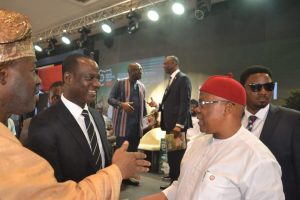
There is a difference between occupying an office and exercising leadership. While an office confers authority, leadership earns confidence through conduct, consistency, fairness and the ability to inspire others.
Chief Uwandu’s profile reflects an appreciation of this broader understanding of leadership.
His engagements across professional, social and community environments demonstrate the importance of maintaining relationships and participating in conversations that bring people together around shared interests and development objectives.
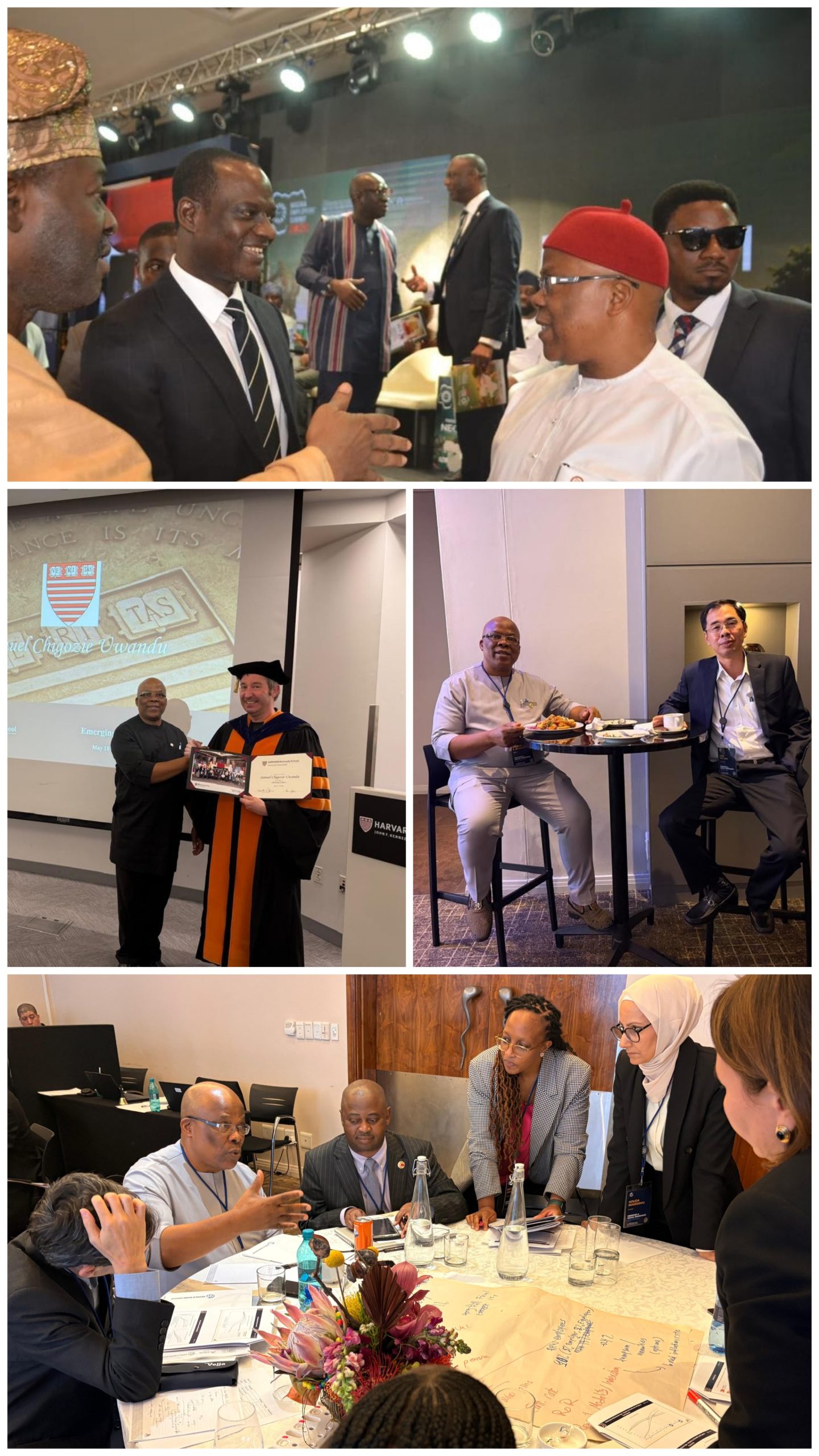
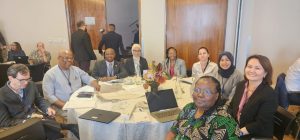
His participation in international leadership and economic engagements, including the World Bank Economic Summit in Cape Town, as reflected in the photographs accompanying his profile, provides another perspective on his professional and social interactions.
International economic forums create opportunities for the exchange of ideas, exposure to different approaches to development and engagement with individuals and institutions from diverse professional backgrounds.
Such platforms underscore the importance of broadening one’s perspective and appreciating how economic policies, institutional reforms, financial management and international cooperation can contribute to development.
For professionals involved in public administration and institutional oversight, exposure to different experiences and perspectives can be particularly valuable.
It encourages the exchange of ideas, promotes professional networking and provides opportunities to appreciate approaches that may be relevant to local institutional challenges.
While international participation should not be measured merely by attendance or photographs, the value of such engagements lies in the knowledge, relationships and perspectives that participants are able to bring back to their professional environments.
For Chief Uwandu, these engagements add another dimension to a profile that combines professional responsibility with an appreciation of collaboration and wider social interaction.
Perhaps the most compelling aspect of Chief Uwandu’s profile is the emphasis on community development and the welfare of ordinary people.
In an age when public attention is frequently directed towards the achievements of individuals in positions of influence, it is important to recognise that leadership also has a deeply human dimension.
The ability to identify with people, understand their difficulties and contribute towards improving their circumstances is an essential quality of responsible leadership.
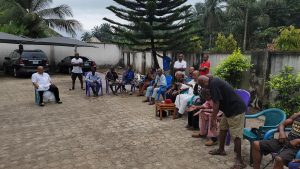
The photographs accompanying Chief Uwandu’s profile offer glimpses of this dimension of his personality. They show him interacting with community members, participating in social engagements and maintaining relationships with people outside formal professional settings.
One of the accompanying accounts captures community members expressing appreciation for support received during the COVID-19 period.
The significance of such gestures becomes clearer when viewed against the background of the difficulties experienced by many households during the pandemic.
COVID-19 disrupted economic activities, affected livelihoods and exposed the vulnerability of families whose survival depended on daily income and small-scale economic activities.
For many people, the period was characterised by uncertainty, financial pressure and the struggle to meet basic household needs.
Against this background, acts of assistance and solidarity carried significance beyond their immediate material value. They represented reassurance, compassion and the recognition that people should not be abandoned during difficult moments.
The appreciation reportedly expressed by members of the community for support received during that period speaks to the importance of remembering people in moments of vulnerability.
Indeed, a person’s influence is sometimes best understood through the memories of those who have experienced kindness or received assistance when they needed it most.
Such relationships cannot be established through official titles alone. They grow through genuine interaction, consistency and a willingness to recognise the dignity of others.
A biographical account of Chief Uwandu also highlights his involvement in community development, educational support, assistance to vulnerable families and initiatives aimed at improving rural livelihoods.
These areas of engagement are particularly important because they address some of the fundamental challenges confronting communities, especially those with limited access to economic opportunities and essential social support.
Education, for instance, remains one of the strongest instruments for breaking the cycle of poverty and creating opportunities for future generations.
Supporting educational development is therefore not merely an act of generosity. It is an investment in human capacity, social mobility and the future of society.
When children and young people receive the necessary encouragement and support to pursue education, they are better positioned to develop their talents, acquire relevant skills and contribute meaningfully to their communities.
Similarly, assistance to vulnerable families reflects an understanding that development must be inclusive.
A society cannot achieve sustainable progress when significant sections of its population are excluded from opportunities or left without support during periods of hardship.
Vulnerable households often require practical interventions that help them meet immediate needs while providing pathways towards greater stability and self-reliance.
Community development initiatives aimed at improving rural livelihoods are equally significant.
Rural communities constitute an important part of Nigeria’s social and economic structure. Their development requires attention to the conditions that enable people to sustain their livelihoods, improve household welfare and participate meaningfully in economic activities.
The importance of individuals who recognise these needs and contribute to community-oriented initiatives cannot be underestimated.
While government remains central to the provision of public infrastructure and social services, individuals, professionals, organisations and community leaders also have important roles to play in complementing development efforts.
Chief Uwandu’s reported involvement in these areas reflects a philosophy of giving back and an appreciation that professional success should not be separated from the responsibility to contribute to society.
It is a reminder that the benefits of achievement become more meaningful when they extend beyond the individual and create positive possibilities for others.
Another notable dimension of Chief Uwandu’s profile is his ability to maintain relationships across different social and professional environments.
Professional achievement can sometimes create barriers between individuals and the communities around them. The demands of official responsibilities, busy schedules and institutional engagements can make it difficult for people in leadership positions to maintain regular contact with ordinary citizens.
However, the ability to remain accessible, sociable and connected to people is an important quality that strengthens leadership.
The interactions reflected in the photographs accompanying his profile present an individual who appreciates the value of social relationships and meaningful engagement.
From community gatherings to professional interactions and international engagements, these moments highlight the importance of connecting with people from different backgrounds.
Being sociable is not simply about attending events, meeting influential personalities or appearing in photographs with associates.
At its most meaningful level, it involves listening, appreciating different perspectives, sharing experiences and creating an atmosphere in which people feel recognised and respected.
Such qualities are particularly valuable in public service, where effective leadership often depends on cooperation, consultation and the ability to build confidence among different stakeholders.
Institutions do not operate in isolation. Their success depends on the commitment and contributions of people working within them, as well as the confidence of the wider public.
A leader who understands the importance of relationships is better positioned to appreciate the human realities behind institutional decisions.
This is especially relevant in the pension industry, where the relationship between regulatory institutions, pension operators, contributors and retirees requires trust, professionalism and effective communication.
The ability to connect with people, while maintaining the discipline and standards expected of public office, is therefore an important attribute of responsible leadership.
Public service places enormous responsibility on individuals entrusted with institutional authority.
Unlike positions whose responsibilities are limited to private organisational interests, public appointments carry obligations that extend to the wider society.
Those entrusted with regulatory and oversight responsibilities must understand that public confidence is built through transparency, consistency, fairness and accountability.
For an institution such as PenCom, these values are essential to maintaining the credibility of the pension system.
Workers contribute towards their retirement over many years, often sacrificing part of their present earnings in anticipation of future financial security.
They therefore expect the institutions responsible for regulating the system to uphold the highest standards of professionalism.
The same expectations apply to pensioners, many of whom depend on retirement benefits as a major source of financial support.
Effective regulation must consequently be guided by an understanding of the real people whose lives are connected to the system.
It requires attention to details, respect for established procedures and a willingness to ensure that institutional responsibilities are discharged in the public interest.
Chief Uwandu’s professional training and experience in accountancy provide a relevant foundation for the demands of such an environment.
His credentials also carry an expectation of professional ethics, discipline and continuous commitment to excellence.
However, the real value of professional qualifications is ultimately demonstrated through conduct and performance.
The challenge before every public officer is to translate knowledge into results, authority into responsible action and opportunity into measurable institutional value.
For Chief Uwandu, his appointment offers an opportunity to bring these principles together in the discharge of his responsibilities.
One of the enduring lessons from Chief Uwandu’s profile is that professional excellence and compassion should not be viewed as separate attributes.
In fact, the most effective leaders are often those who understand that competence must be accompanied by empathy.
Technical knowledge enables a professional to understand complex problems, develop solutions and make informed decisions. Compassion provides the human perspective necessary to appreciate how those decisions affect individuals and communities.
In public service, this balance is particularly important.
Policies, regulations and administrative decisions may appear technical on paper, but their consequences are often experienced by ordinary people.
A decision affecting pension administration, for instance, may have implications for the financial stability of a retired worker and the welfare of an entire household.
Similarly, community development initiatives may appear modest in scale but can create meaningful opportunities for families and young people.
This is why leadership must be evaluated through both institutional performance and its human impact.
The ability to combine professional competence with social responsibility provides a broader understanding of what it means to serve.
It also reinforces the idea that individuals who occupy positions of influence have opportunities to contribute to society in ways that go beyond their official mandates.
Chief Uwandu’s profile reflects this intersection between professional responsibility and personal commitment to community welfare.
Ultimately, the legacy of an accomplished individual cannot be determined solely by the number of positions occupied, professional certificates obtained or distinguished personalities encountered.
These achievements may form important parts of a person’s story, but they do not independently define the full measure of leadership.
A more enduring assessment considers the values an individual represents, the responsibilities fulfilled, the relationships sustained and the positive influence left on the lives of others.
For Chief Samuel Chigozie Uwandu, his professional journey, public-service responsibilities and reported community engagements provide different dimensions of a profile built around achievement and service.
His position as Commissioner for Inspectorate (South East) at PenCom places him within an important national institution whose responsibilities affect the financial future of workers and retirees.
His professional credentials reflect a foundation of technical knowledge and experience relevant to the demands of institutional oversight.
His community engagements, meanwhile, provide an opportunity to recognise the importance of compassion, social responsibility and the willingness to contribute to the wellbeing of others.
The real test of leadership, however, is continuity.
The values that define an individual must be reflected consistently in the way responsibilities are discharged, relationships are maintained and opportunities are used to advance the common good.
For those in public office, this means remaining committed to accountability, institutional development and the welfare of the people whose interests their positions are intended to serve.
For professionals, it means understanding that knowledge and experience carry responsibilities that extend beyond personal advancement.
And for community leaders, it means recognising that development becomes meaningful when it creates opportunities for people who might otherwise be left behind.
Chief Samuel Chigozie Uwandu’s story offers an important reminder that the most meaningful form of success is one that combines personal accomplishment with a commitment to the wellbeing of others.
His journey from professional practice to an important public-service responsibility at the National Pension Commission reflects the value of preparation, competence and dedication.
His engagements in community development and social support, as documented in his profile, also highlight the importance of maintaining a connection with the people beyond the formalities of official life.
In a world increasingly preoccupied with status, recognition and material accomplishments, his story provides an opportunity to reflect on the qualities that make leadership genuinely meaningful.
A distinguished professional is not simply one who possesses impressive qualifications. A compassionate leader is not merely one who occupies a position of authority. A man of the people is not defined by public appearances or social connections.
These qualities acquire their true meaning when they are demonstrated through responsible conduct, genuine relationships, practical contributions and a consistent concern for the welfare of others.
For Chief Uwandu, the opportunity ahead is to continue building on his professional foundation, strengthen his contribution to the pension regulatory environment and sustain the spirit of service reflected in his community engagements.
The significance of his journey lies in the possibility of bringing these different dimensions together: the discipline of a professional, the responsibility of a public officer, the vision of a leader and the compassion of a person who understands the importance of humanity.
Indeed, the finest measure of leadership is not how far a person rises but how many lives are positively influenced along the way.
And when professional excellence is guided by integrity, public responsibility is strengthened by compassion, and personal success is accompanied by a willingness to give back, leadership acquires a value that extends far beyond the walls of any office.
That is the enduring message of Chief Samuel Chigozie Uwandu’s story: that true distinction is achieved not merely by what one becomes, but also by what one contributes to the lives of others and the society at large.