
Esther Oseyiomon
Nigeria is using the World Public Relations Forum in Abuja to make a policy case that communication is no longer a publicity function, but a core function of governance.
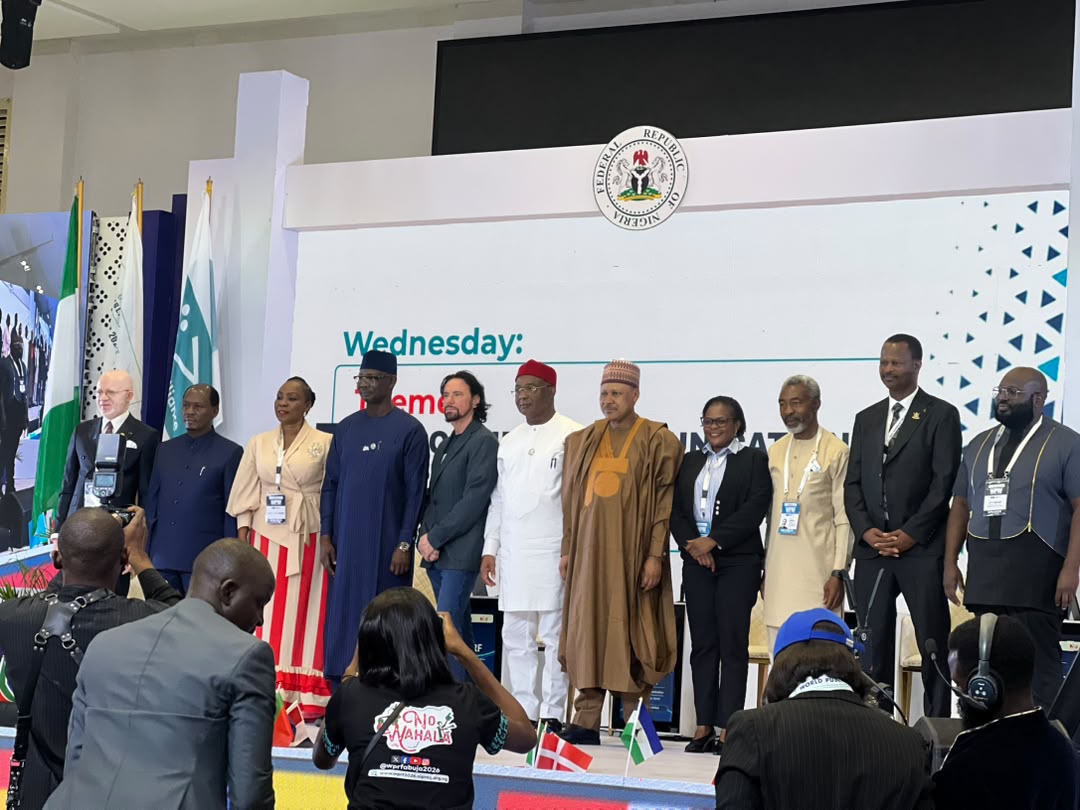
The forum opened on Tuesday in Abuja with delegates from more than 126 countries in attendance. It is the first edition to be held in West Africa and only the second on the African continent.
The gathering brought together ministers of information, ambassadors, governors, public relations professionals and other stakeholders to discuss economic prosperity, the changing global landscape, information, shipping, aviation and the environment.
But beyond the size of the gathering, the dominant message from the Nigerian government was about policy: how to fight misinformation, how to sustain difficult economic reforms, and how to build institutions that will train the next generation of communicators and leaders.
The clearest policy announcement came from the Honourable Minister of Information and National Orientation, Alhaji Mohammed Idris.
In his welcome address, Idris announced that Nigeria has established the first-ever Media and Information Literacy Centre, a UNESCO Category 2 Institute, in Abuja.
He described it as Nigeria’s practical contribution to the global effort to tackle misinformation and disinformation, and as proof that the country is moving from talking about fake news to building an institution to fight it.
Idris said the world is being reshaped by adaptive and progressive technology, and that governments must adapt to changing information systems, traditional media structures and communication practices.
He stressed that national unity, citizens’ engagement and national values remain key priorities for Nigeria, and that those values cannot be protected if citizens cannot distinguish fact from falsehood.
He described Nigeria’s hosting of the event as a sign of the respect the country enjoys across Africa, and said the forum provides an opportunity for African governments to share experiences within the context of friendship and trust.
He welcomed first-time visitors to Nigeria and assured them that the country’s doors remain open to all delegates.
The link between policy and communication was made even clearer by the Executive Governor of Imo State, Senator Hope Uzodimma.
Speaking on responsible governance and trust, Uzodimma said the toughest task in leadership is winning the trust of the people and keeping it, especially when decisions initially cause hardship before benefits become evident.
He cited the removal of the fuel subsidy by President Bola Ahmed Tinubu as a defining example.
According to him, although the subsidy was meant to help ordinary Nigerians, much of its benefits ended up in the hands of those within the sector. The decision to end it, he said, was taken because it was the right thing to do in the overall interest of the country.
Uzodimma said the reform has given states and the Federal Capital Territory more resources for infrastructure and socio-economic development, even though many families faced difficult times when prices were adjusted.
For him, the lesson is that reforms cannot survive on economics alone. They need communication.
He said his administration has adopted public relations as a strategic leadership role that builds trust, reputation and long-term relationships through ethical, transparent and professional communication.
He disclosed that Imo State introduced a stakeholders’ forum in 2020, held almost every three months, where citizens ask difficult questions and openly express concerns about government policies. The state later introduced radio town hall meetings broadcast simultaneously on more than 20 radio stations.
Uzodimma said the engagements have helped government explain its policies, listen to the people and address emerging problems early, including challenges faced by pensioners and retired public servants.
He admitted that some pensioners have waited for extended periods without receiving their entitlements, through no fault of theirs, but said government has continued to communicate honestly with them while working to address the problem.
He urged public relations professionals to practise what they advise, adding that if they tell government to listen to the people, they must also help the people to listen to government.
The Executive Governor of Nasarawa State, Engr. Abdullahi A. Sule, presented the third policy pillar of the forum, which is institution-building.
Sule said Nasarawa State is strategically located next to the Federal Capital Territory and is endowed with lithium, iron ore, bauxite, lead, zinc and tin in commercial quantities, as well as over 26,000 square kilometres of land and water resources for agriculture.
He said the state’s most important contribution to the global public relations profession is the proposed University of Public Relations and Leadership, the first of its kind in Nigeria, being developed in partnership with the Nigerian Institute of Public Relations.
Drawing inspiration from Harvard University, established in 1636, Sule said the institution is intended to promote excellence in public relations, leadership, teaching and research, and to prepare future leaders rather than merely produce undergraduate graduates.
He said the university requires a serene environment conducive to learning, research and reflection, which is why Nasarawa State was chosen as its home.
He directly linked the project to federal economic reforms, saying the project became possible partly because of the removal of the fuel subsidy and the floating of the naira, which made additional resources available to the state.
According to him, the state intends to utilise part of the resources and savings from those reforms to support the establishment of the institution, which will create opportunities not only for Nasarawa State but also for Nigeria and the international public relations community.
Sule invited delegates to visit Nasarawa State and become part of the initiative.
Taken together, the three presentations formed a single policy argument: misinformation must be countered with literacy, reforms must be sustained with trust, and trust must be built with institutions.
The Minister of Information said President Bola Ahmed Tinubu was expected to address the gathering later in the day, adding that the Federal Government will continue to provide platforms that promote mutual understanding, cooperation and shared aspiration for a peaceful world.