
Esther Oseyiomon
Concerns over declining public confidence in Nigeria’s electoral process have come into focus, with senior lawyers calling on the Independent National Electoral Commission (INEC) and the judiciary to strengthen institutional credibility, ensure fairness and reduce the growing dependence on courts to resolve election disputes.
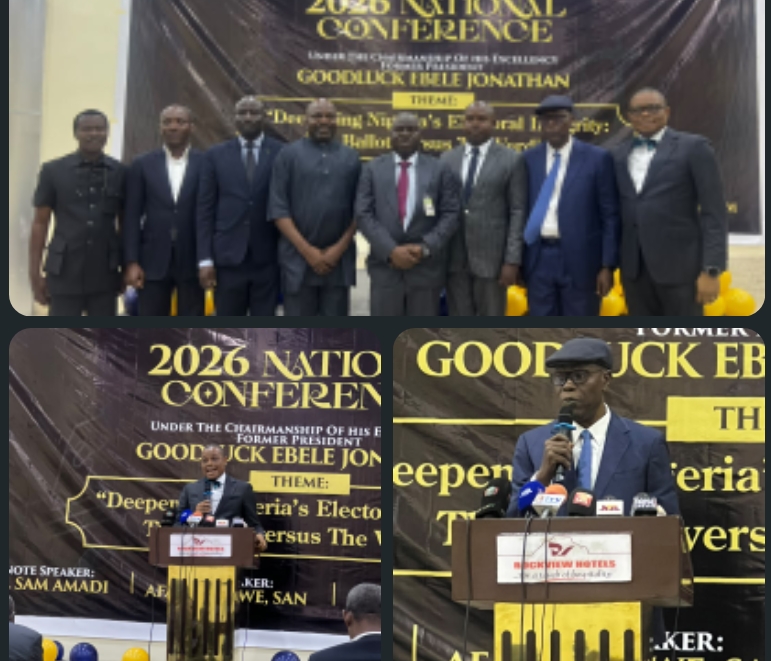
The speakers made the call at a gathering organised by the National Association of Judicial Correspondents (NAJUC), where they examined the relationship between the electoral process, judicial decisions and public trust ahead of another major election cycle.
Representing the Chief Justice of Nigeria, Tobi Soniiyi commended the association for sustaining programmes aimed at promoting judicial reporting, recalling his experience as a former chairman. He acknowledged that the judiciary, like other public institutions, had its challenges but urged stakeholders to express their concerns constructively.
Soniiyi, who said his experience as a judicial editor, political editor, lawyer and journalist had exposed him to different sides of the justice system, stressed the importance of honest public engagement and responsible criticism in strengthening democratic institutions.
In his remarks, Principal Partner of Kehinde and Partners, Akinlolu Timothy Kehinde, SAN, called on INEC to ensure fairness and consistency in the administration of electoral rules, warning that uncertainty surrounding the commission’s decisions could push more political disputes into the courts.
Citing a dispute involving the Zenith Labour Party and Labour Party, Kehinde questioned what he described as conflicting positions by INEC over the deadline for submitting digital party registers. He argued that the commission must ensure its positions before different courts are consistent and must not create the impression that it is favouring one political party over another.
He urged the electoral body to respect the rights of all political parties and allow candidates to seek the support of voters through their programmes and ideas, rather than allowing avoidable administrative disputes to undermine political participation.
Also speaking, the President of the Nigerian Bar Association, Afam Osigwe, SAN, warned that Nigeria’s electoral process was losing public confidence because many citizens increasingly doubt whether their votes determine election outcomes. He argued that the integrity of an election must begin with accurate counting and collation of votes that reflect the wishes of the electorate.
Osigwe said the electoral umpire must remain neutral, just as a referee in a contest cannot become a participant without compromising the integrity of the process. He identified two critical stages of electoral credibility: the results declared by INEC and the decisions delivered by courts when election outcomes are challenged.
He further questioned the increasing role of litigation in determining political leadership, warning that disputes over party leadership and candidate selection were sometimes producing prolonged uncertainty for parties and voters. He also expressed concern over what he described as judge-shopping, where politicians pursue cases in search of favourable judicial outcomes.
The NBA president maintained that credible elections would reduce the need for extensive court intervention, noting that when voters believe the declared results genuinely reflect their choices, they are more likely to accept the outcome. He also raised concerns about strict evidentiary requirements in election petitions, arguing that petitioners may struggle to obtain witness statements from individuals or institutions whose actions they are challenging.
The speakers’ contributions highlighted the need for INEC to maintain consistency and neutrality, the judiciary to strengthen public confidence through credible and coherent decisions, and the media to continue informing citizens through accurate and responsible reporting. They stressed that restoring trust in the electoral process is essential to democratic stability and the country’s long-term development.