
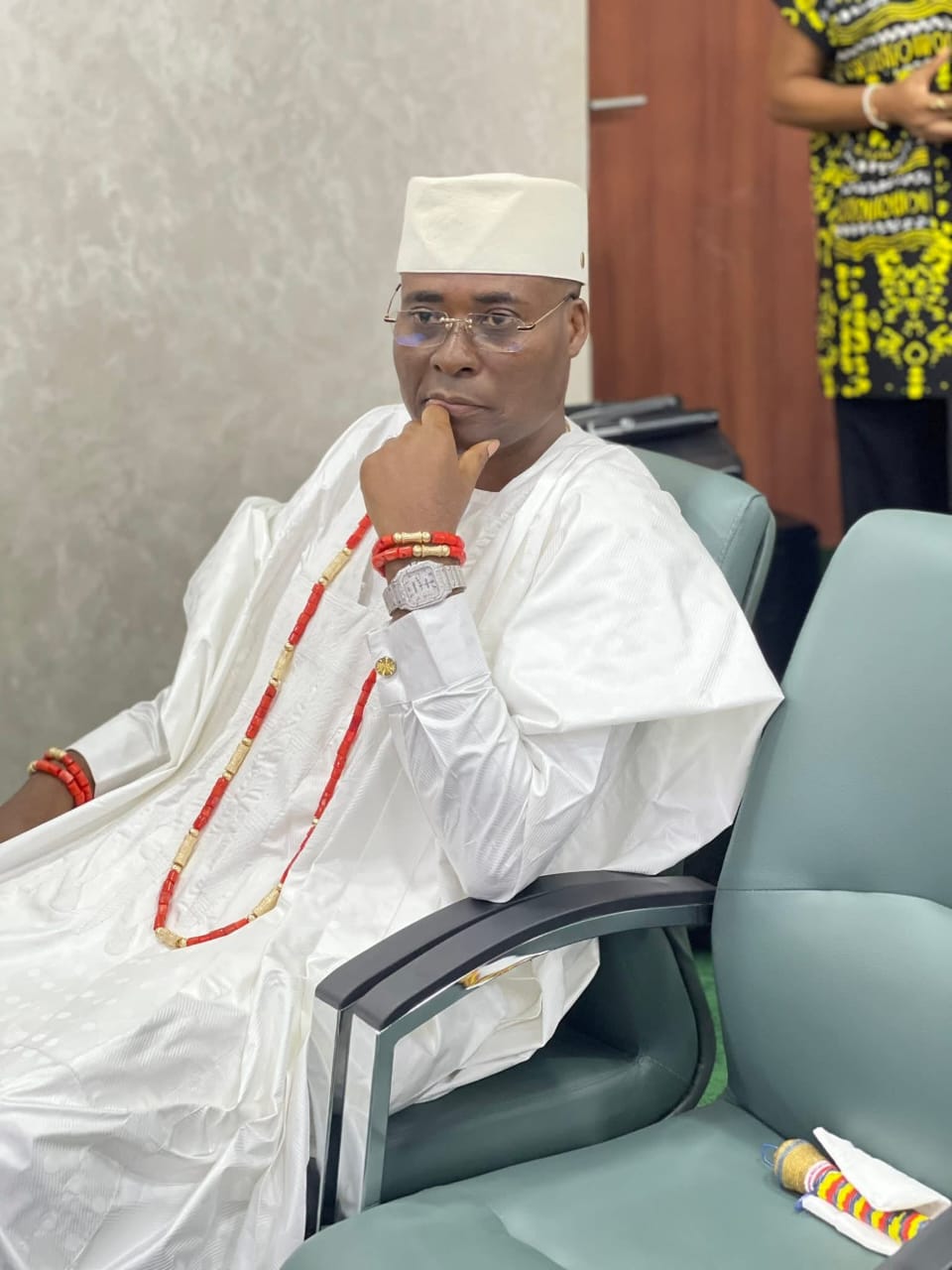
Joseph Chibu
Retired Major General Raymond Ochei has called for stronger interagency cooperation, real time intelligence sharing and coordinated security operations among Nigeria’s security institutions, warning that rivalry, intelligence hoarding and jurisdictional conflicts could undermine the country’s fight against evolving security threats.
Ochei, who was represented by Arc. Emmanuel A. Egbumokei as Chairman of the Occasion, made the call at the third edition of the Razor News Interagency Cooperation Lecture and Awards 2026, held on Friday, November 27. The event featured a lecture themed, Interagency Synergy for National Security: Strengthening Intelligence Sharing and Joint Operations.
In his address, the retired general commended the management and editorial team of Razor Media Group, led by Mr Sunday Odita, for sustaining the initiative and promoting developmental journalism at a time when sensational reporting often competes with responsible and issue driven journalism.
He noted that Nigeria’s security challenges had become increasingly complex and interconnected, requiring security institutions to move beyond isolated operations and embrace a unified approach. Drawing from his military experience, Ochei stressed that no single arm of the armed forces could win a war independently, adding that success in modern security operations depended on intelligence fusion, logistics, tactical coordination and unified command.
According to him, insurgency in the North-east, banditry, kidnapping, illegal mining and transnational cybercrime demonstrate the changing nature of threats confronting the country.
He argued that criminal networks operate across geographical and institutional boundaries, making it imperative for security agencies to strengthen cooperation rather than operate within restrictive institutional structures.
Ochei warned that interagency rivalry, intelligence hoarding and jurisdictional disputes were costly weaknesses Nigeria could no longer afford. He maintained that effective synergy must go beyond joint patrols, ceremonial engagements and occasional meetings to establish institutional trust and ensure that actionable intelligence is transmitted promptly to agencies best positioned to respond to emerging threats.
He further emphasised that the military, police, Nigeria Security and Civil Defence Corps, intelligence services and other paramilitary formations must function as interconnected components of a common national security framework. Such cooperation, he said, would improve operational efficiency, strengthen responses to security emergencies and enhance the country’s collective capacity to confront criminal networks.
The former general also identified the media and the citizenry as critical partners in national security, describing them as indispensable force multipliers. He said public confidence in security institutions encourages citizens to provide useful intelligence, while responsible journalism helps balance the media’s constitutional responsibility with the need to protect sensitive operational information and prevent misinformation from benefiting criminal elements.
Addressing the award recipients, Ochei described their recognition as an affirmation of their integrity, professionalism, resilience and sacrifices in the service of the nation. He urged them to regard the honour as a renewed responsibility to uphold higher standards of accountability, institutional cooperation and commitment to national security.
He called on security leaders and other stakeholders at the gathering to translate discussions from the lecture into practical measures capable of strengthening operational relationships among agencies.
Ochei also expressed appreciation to Razor Media Group for the initiative and acknowledged the presence of distinguished guests, including the Royal Mother of the Day, the Inspector General of Police and the Assistant Inspector General of Police, Zone 2, alongside their representatives, before formally declaring the third edition of the lecture and awards open.