
Esther Oseyiomon
Experts in health and technology have urged stronger regulation of artificial intelligence (AI) in Nigeria’s healthcare system to ensure the benefits of innovation do not come at the expense of safety or equity.
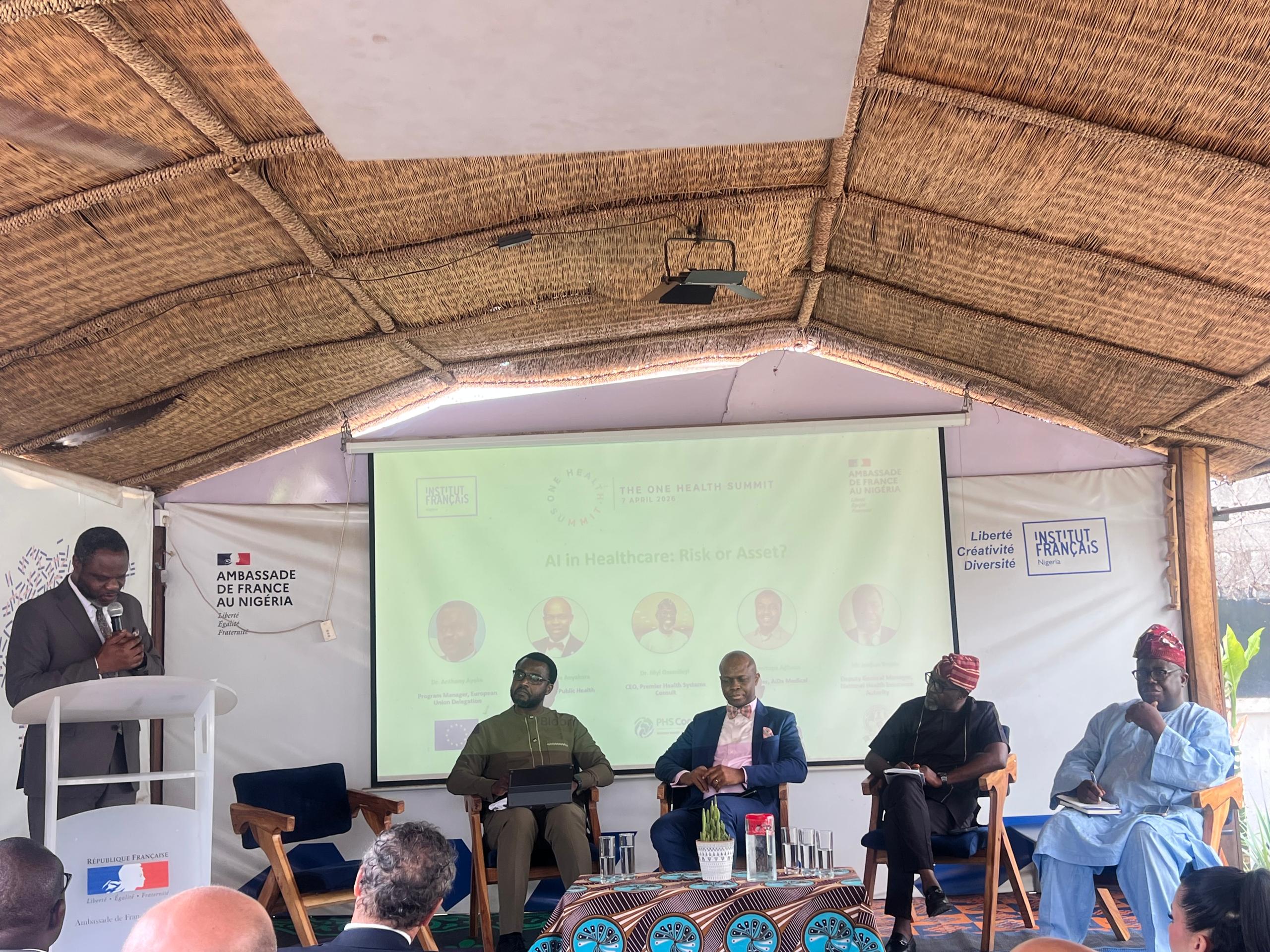
The debate took place at the French Institute in Abuja, bringing together government officials, healthcare professionals, and development partners to discuss AI’s opportunities and risks.
Thierry Vapentin, Director of the French Institute, described the forum as a safe space for open discussion. “This platform allows participants to share knowledge freely and explore innovative solutions while debating critical issues,” he said.
Anthony Ayeke, Programme Manager at the European Union Delegation in Nigeria, highlighted that AI adoption is growing rapidly across Africa. He cautioned that without strong oversight, accountability, and secure data management, the technology could do more harm than good.
Niyi Osamiluyi, CEO of Premier Health Systems Consults, proposed an ethical framework for AI deployment. “AI systems must be transparent, inclusive, and accountable. Institutions and individuals must take responsibility for decisions driven by AI,” he said.
Joshua Kojalo, a digital health advocate, emphasized the role of local data in developing AI tools. He said government-led mobile health apps can ensure rural and urban populations benefit equally and avoid biased outcomes.
Temitope Agbana, co-founder of AIDX Medical, shared lessons from AI-driven laboratory systems. “Technology can double processing efficiency, but human supervision is crucial. No system is perfect, and errors must be caught early,” he warned.
Chimezie Anyakora, CEO of Bloom Public Health, stressed the need to protect vulnerable populations. “AI is exciting, but without clear regulations, those most at risk could face the worst consequences. Ethical safeguards are essential,” he said.
The debate concluded with consensus that AI can strengthen Nigeria’s healthcare system, provided there is strong governance, government oversight, local capacity development, and ethical guidelines to prevent harm and ensure equitable access.