
By Chigozie Daniel
Traders at the Lagos International Trade Fair Complex have renewed calls for a strategic partnership with the federal government, as mounting infrastructural decay and regulatory bottlenecks threaten the survival of one of West Africa’s busiest commercial hubs.
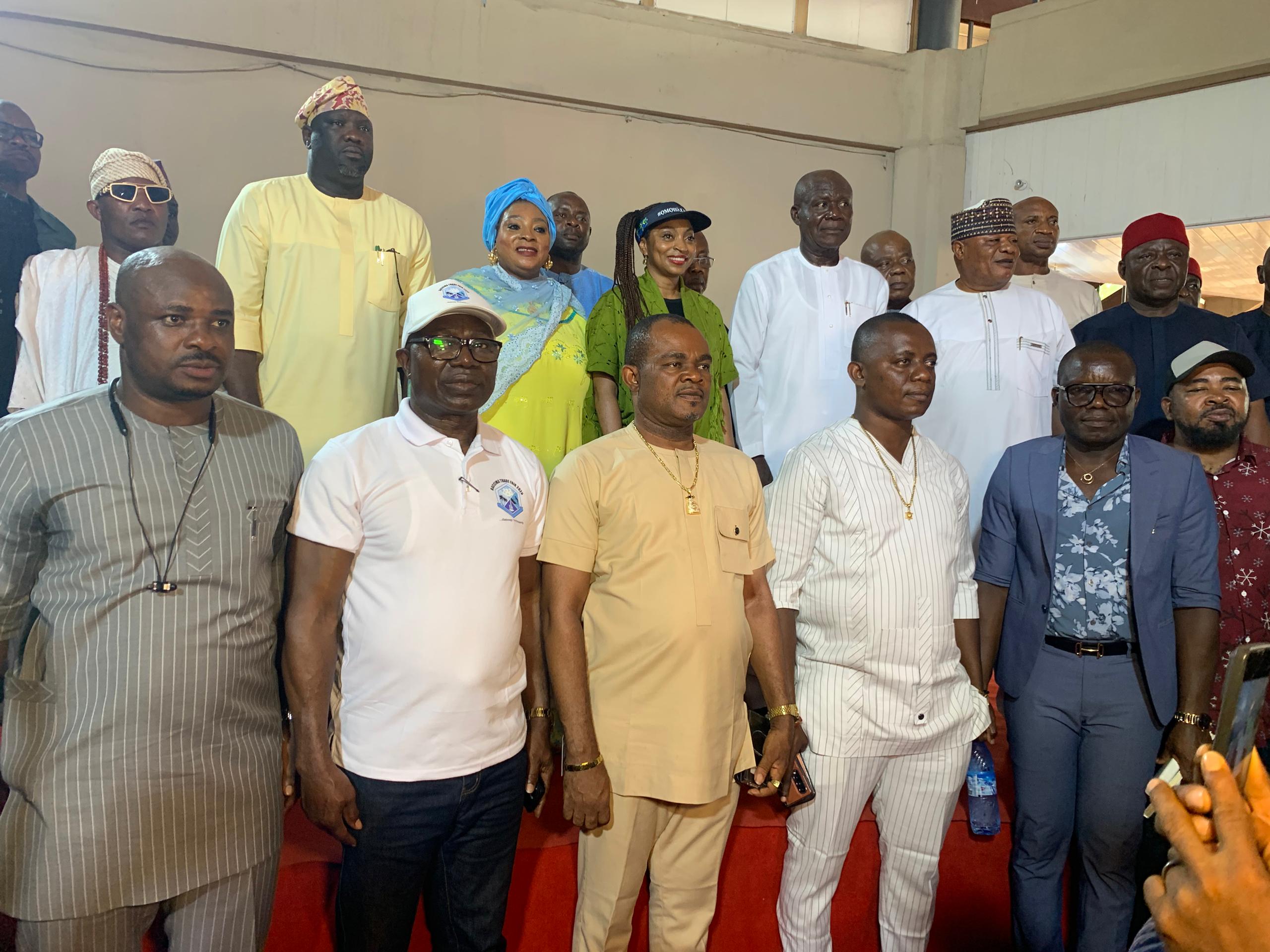
The appeal followed a high-profile visit by the Minister of Industry, Trade and Investment, Mrs. Jumoke Oduwole, whose engagement with stakeholders exposed both the immense economic value of the complex and the deep-rooted challenges confronting operators.
Located along the Lagos–Badagry Expressway, the Lagos International Trade Fair Complex has, over the years, evolved into a critical nerve centre for wholesale trade, linking Nigeria to key markets across the West African sub-region.
Originally conceived as a purpose-built exhibition ground, the facility now spans about 32 hectares, housing warehouses, plazas, administrative buildings, and expansive trading spaces that accommodate thousands of businesses.
What began as a modest, swampy expanse has, through private investment, been transformed into a thriving marketplace attracting traders from countries such as Ghana, Benin, Togo, and Niger.
Chairman of the Board of Trustees, Mr. Okey Ezibe, recounted the remarkable journey of the complex, describing it as a testament to resilience and entrepreneurial vision driven largely by local investors since 1998.
According to him, traders poured billions of naira into rebuilding the once-neglected facility, turning it into what he called “an enviable masterpiece” that now supports millions of livelihoods across the region.
Despite this transformation, Ezibe lamented that government support has remained grossly inadequate, leaving traders to grapple with multiple taxation, excessive checkpoints, and persistent harassment.
He disclosed that goods transported from ports and border points are subjected to numerous checkpoints, sometimes exceeding 20, significantly inflating the cost of doing business and, ultimately, consumer prices.
The traders also decried the poor state of infrastructure within the complex, citing dilapidated access roads, erratic power supply, and the absence of basic amenities such as street lighting.
They argued that despite paying billions in ground rents and levies to government agencies, there has been little to no corresponding investment in upgrading critical infrastructure.
Further compounding their frustrations are past demolition exercises within parts of the complex, which traders said resulted in massive financial losses and weakened investor confidence, including that of foreign partners.
Responding, the minister acknowledged the concerns and commended traders for their significant contribution to Nigeria’s economy, noting that their scale of operations belies their classification within the informal sector.
She assured stakeholders of the federal government’s commitment to addressing regulatory inefficiencies, harmonising taxes, and improving infrastructure, while proposing quarterly consultations to ensure accountability and measurable progress.
Oduwole also highlighted plans to position the complex as a strategic hub under the African Continental Free Trade Area framework, revealing that Nigeria is preparing to host a major intra-African trade fair in 2027.
For many stakeholders, the visit signalled a turning point, raising cautious optimism that sustained dialogue and genuine collaboration could unlock the full economic potential of the trade fair complex and restore confidence in its future.