
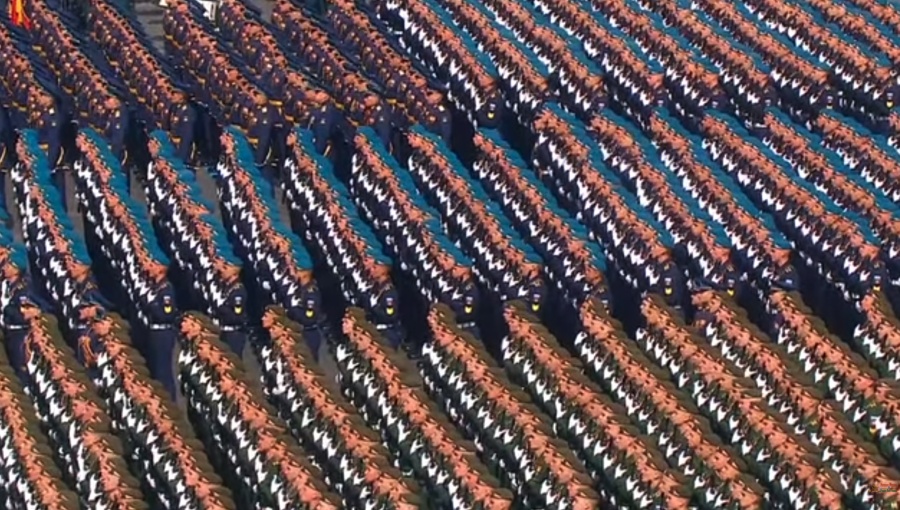
The Europeans are preparing for a possible war with Russia, but how will that go? Russia’s army is now a veteran of four-years of the most intense war since WWII. Europe’s army is a shambles after three decades of underinvestment.
By Patricia Marins
The Europeans are preparing for a possible war. But how do they plan to fight? Amid all the talk of a possible war, Nato launched its largest exercise in decades, Steadfast Defender 2024, on January 24. It involved 90,000 troops.
Estonia, Latvia, and Lithuania are building a network of physical barriers as part of a “Baltic Defence Line”; the Nordic nations are implementing a “total defence” strategy; and the European Union (EU) has launched a Black Sea strategy to bolster regional defence and infrastructure in Southern Europe.
As European Commission President Ursula von der Leyen announced, the ReArm Europe/Readiness 2030 plan includes investments of over €800bn.
Germany plans to boost military recruitment to approximately 260,000 soldiers, up from the current 180,000; on November 27, Macron spoke from Varces-Allières-et-Risset (southeastern France), announcing the introduction of a 10-month voluntary national service, strictly military, to begin in summer 2026.
All these events, associated with the increase in arms production, characterise preparations for war.
The European problems in this endeavour range from low industrial production, lack of control over the supply chain, high energy costs, as well as high costs of ammunition and defence equipment. Additionally, the absence of a consolidated drone and long-range missile industry weighs heavily in a war against the Russians.
Today, the Russians already have a battle-hardened army of 700,000 troops, which is expected to expand by 450,000 by the end of 2025. No European country, except Ukraine, has anything resembling this, and the Ukrainian forces are exhausted and in very low numbers after years of attrition against a demographically superior country. European states would have to reinstitute conscription and find the funds to recruit contracted soldiers to constitute even a force of deterrence.
Another problem would be training; if we evaluate the burden of training and organising Ukrainian forces, any European coalition must face up to previous failures, such as Nato’s role in preparing Ukraine’s abortive 2023 offensive. Approximately 100,000 Ukrainian recruits have been trained in Europe, with 45,000 going to the UK. The truth reported in various accounts from Ukrainian soldiers is that Nato instructors lack combat experience in modern warfare. For years, Western armies and their defence industries have concentrated on counterinsurgency operations or mopping up after devastating Nato air power has crushed a much weaker opponent. Taking on a peer adversary like the Russians in a war of attrition is a totally different challenge. Nato currently has a poor understanding of the enemy they intend to confront.
Rare are the Western commanders with any idea about Russian logistics, troops, industry and its capacity to adapt.
In the European case, no one can maintain a battle front with the costs of armament production.
Rheinmetall recently sold 30mm and 35mm rounds to the German Ministry of Defence at a cost of over $1,000 each. The same German industry sells a Caracal 4×4 to the German government for more than $600,000, not counting the cost of ammunition that reaches $5,000 dollars. This price is five times what the Russians pay and more than 10 times what the Indians pay.
In general, European equipment is 2–4 times more expensive than Russian equipment, which, besides lower cost, is produced in greater quantity.
There is no minimal sustainability in the European industry to think about war. First, in energy terms. For every 1% increase in defence, you can expect at least 0.5% more in energy, demanding high investment and time. Additionally, an extra 5–7% expenditure from civilian industries would follow this investment.
In World War II, energy consumption for defence purposes exploded: defence spending jumped from 1.2% of GDP in 1938 to over 30% in 1944, driving an industrial production surge that doubled energy use in the manufacturing sector.
In that scenario, civil industries get reconverted—for example, car factories turning into armoured vehicle plants. It’s an absolute explosion in energy demand, from gas and coal to electricity and, above all, oil.
So where is Europe going to get all that for a war with the Russians? In terms of equipment, for example, it is estimated that Europe has around 2,900 battle-ready modern 120mm tanks and about 1,500 in usable condition. In contrast, Russia produced around 1,500 tanks in 2024, along with 5,700 armoured vehicles and 450 artillery pieces. Russia also has the advantage of being able to recapture and repair its damaged equipment as an advancing army, something denied to the retreating Ukrainians. For this capacity, the Russians actually have more deployed armoured vehicles in Ukraine than in 2022. Ukrainian intelligence has estimated that as of 2025, Russia’s annual production of strategic and tactical missiles is around 3000.
This would make air defence a serious problem. Most European air defence systems, such as the IRIS-T and NASAMS, cannot intercept ballistic missiles. Theoretically, the Franco-Italian SAMP/T can, but they still don’t produce it in sufficient amounts. They have promised to increase production and the cost of these missiles, but that also takes time.
Besides demanding resources, Russia produces 75% of the chemicals needed for domestic munition production of 3mn artillery shells and other ammo annually.
Europe is suffering major destabilisations in its supply chains from Asia to Africa. There are shortages in nitrocellulose due to China’s 2024 export bans. TNT and antimony are in short supply, delaying mining and the production of munitions, primers and tanks.
The Russians have been preparing for a long conflict in Ukraine for four years, and in that period, they have created a much larger war infrastructure than the European’s have, mainly in drones.
The Alabuga Special Economic Zone is considered to be the world’s largest drone factory and aims to produce 60,000 long-range drones a month by the end of 2025. Russia’s growing drone production capacity, in which $7.5bn has been invested, is predicted to employ 333,000 people in 900 companies by 2026. Meanwhile, over 2023 and 2024, Russia invested in five complexes for solid-fuel, engines and other missile components.
What would be left for the Europeans is aviation.
Nato in Europe currently has around 1,500-1,700 fourth-generation or higher aircraft, while the Russians have slightly less than half that number, though with much lower production rates. But in compensation, they possess many more air defence systems tested and matured on the battlefield.
Nato has never faced modern air defences. Both in Iraq, as in Libya, in Syria or in Serbia, it encountered Soviet systems that were at least almost two decades old.
And what missiles will these European Nato planes use? The European ammunition stocks did not last a month in Libya, at an intensity 10x lower than what a conflict with Russia would be.
Europe only has 3 air-to-ground munitions with a range greater than 80km: The SCALP-EG, Storm Shadow and Taurus missiles. All three are out of production and structuring for resumption for new versions of the missiles. To get an idea of the contrast, the Russians are launching more than 1,200 glide bombs per week in Ukraine, with ranges of 70-200km.
How many of the 3,000 ballistic and cruise missiles would need to fall on European centres for the political class’s discourse to change? And there is no effective air defence. Currently, Patriots intercept only a small fraction of the missiles.
A conventional war against a truly prepared Europe would pose a serious challenge for the Russians, if those countries actually get prepared. However, it would take Europe at least 7–10 years to reach a condition to fight or deter Russia in a high-intensity conventional conflict.
President Donald Trump said Russia is in a stronger military position in its war on Ukraine and chided European leaders for what he called excessive dialog that’s produced scant results in his latest broadside against historical allies during an interview with Politico.
“Russia has the upper hand. And they always did,” Trump said in a wide-ranging interview with Politico published on December 9. “They’re much bigger and stronger in that sense.”
Despite the president’s love of hyperbole, for once he might actually be right.
Credit | bn IntelliNews