
· Human Rights Day session highlights regulatory gaps, access to funding challenges
Chidinma Iroegbu
Legal and civil society experts have raised alarm over systemic barriers preventing grassroots civil society organisations (CSOs) from accessing banking services and donor funding, warning that inconsistent regulatory frameworks across Nigeria are undermining constitutional guarantees of freedom of association.
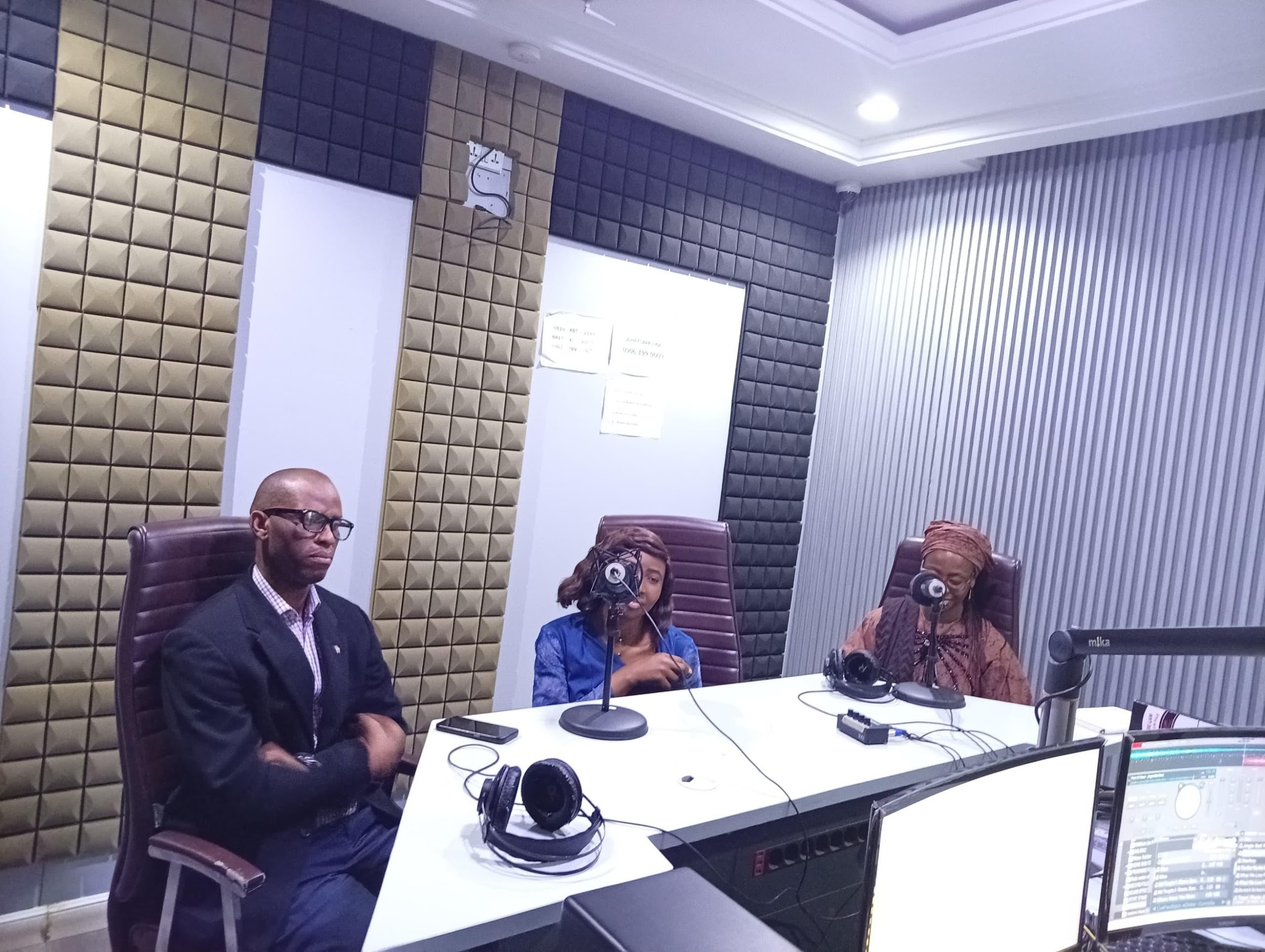
Speaking during a special Human Rights Day radio session on Democracy Radio 104.9 FM in Abuja on December 10, 2025, the experts painted a troubling picture of community-based organisations trapped in a regulatory maze that denies them legal personality despite constitutional protections.
The programme, organised by the EU–CSO Strengthening Bridge (EU CSO-Bridge) project in support of the ROLAC II Programme of International IDEA, featured Dr Benson Olugbuo, a public interest legal practitioner; Dr Elisabeth Agbiti-Douglas, Project Director at the Nigerian Youth Futures Fund (NYFF); and Barr: Shekwonya Galadima, Chief Law Research Officer at the National Law Reform Commission (NLRC).
Olugbuo explained that while Nigeria’s Constitution guarantees freedom of association, the implementation framework has created significant obstacles for local CSOs.
“Freedom of association simply means the right to relate with other people and form groups, organisations, or communities based on shared interests or purposes. This includes joining political parties, cooperatives, community associations, religious groups, and non-profit organisations. The Constitution guarantees every Nigerian this right,” he said.
He, however, highlighted a critical gap in the regulatory system. “Many local associations register with state ministries, but these certificates do not grant them legal personality. Without legal recognition, they cannot open bank accounts. Even if a group is registered at the state level, banks will still ask for CAC registration, SCUML certification, and other regulatory documents.”
Olugbuo revealed that CSOs currently navigate 30-35 regulatory frameworks, noting that registration with the Corporate Affairs Commission (CAC) is the only way to obtain full legal status.
Also speaking, Agbiti-Douglas warned that community groups’ inability to access formal banking systems exposes them to financial risks and excludes them from donor funding opportunities.
“A democratic society cannot function if people cannot freely organise. When small, community-based groups lack legal status, significant risks emerge. Individuals manage funds because the organisation does not have a bank account. That blurs lines between personal and organisational finances, creating opportunities for misuse,” she said.
She stressed that regulations designed to curb fraud and terrorism financing inadvertently push local organisations into informal, riskier financial practices.
“Nigeria’s most severe development challenges—poverty, maternal mortality, food insecurity—are concentrated at the grassroots. Yet the groups best positioned to address these issues cannot access the resources they need to function legally and effectively,” Agbiti-Douglas added.
In the same vein, Galadima disclosed that amendments to the Social Development Act of 1974 are currently underway to address gaps in social inclusion, gender mainstreaming, and protection of vulnerable groups.
She explained that inconsistent state registration systems create confusion and weaken civil society. “Many states have no clearly defined legal framework for registering CSOs. Even when ministries issue certificates of recognition, these documents do not confer legal personality. Regulatory frameworks also differ widely from state to state, creating confusion and weakening civil society at the grassroots.”
Galadima emphasised that strengthening the legal environment for CSOs, especially at the grassroots level, is essential for inclusive development, adding that Nigeria’s legal framework must align more closely with the African Charter on Human and Peoples’ Rights.
During the interactive session, listeners contributed practical suggestions. Emeka from Jabi called for a simplified registration process to enable more people to start community groups without bureaucratic bottlenecks. At the same time, Samuel urged the government and local authorities to create platforms for grassroots groups to present ideas and receive support.
Dr. Olugbuo painted a vision of what Nigeria could achieve with fully supported subnational CSOs. “Nigeria would open up. People would experience a real sense of belonging. Development efforts would accelerate because community groups would access support more easily, stay regulated, and function legally.”
The session underscored the urgent need for harmonised laws, simplified registration processes, and reforms that recognise subnational CSOs as essential development actors.
The EU CSO-Bridge project strengthens civil society organisations and expands civic space in Nigeria through capacity-building, advocacy, and policy engagement.