
Lessons for the Sahel from Iran, Syria and Venezuela
By Oumarou Sanou
The world appears once again on edge. Tensions in the Middle East involving Iran, Israel and the United States have revived familiar questions about the limits of power, alliances, and survival in an increasingly volatile global order. Yet beyond the immediate theatre of conflict lies a deeper lesson; one that Africa, particularly the junta-led states of the Sahel, would do well to reflect upon.
Recent events in Syria and the mounting pressures faced by countries like Iran and Venezuela demonstrate a hard geopolitical truth: reliance on great powers for protection can often prove illusory. When crises escalate or strategic calculations change, even the most vocal allies may offer little more than rhetorical solidarity.
This is a reality that resonates strongly in today’s Sahel, where Mali, Burkina Faso, and Niger, the core of the Alliance of Sahel States (AES), have pivoted sharply toward Moscow while distancing themselves from traditional Western partners and regional institutions such as ECOWAS.
There is nothing inherently wrong with sovereign nations pursuing partnerships with global powers. States must engage the world pragmatically to advance their interests. The danger arises when such alignments become ideological crusades that corner countries into rigid geopolitical camps. History suggests that when great-power rivalries intensify, smaller states risk becoming pawns rather than partners.
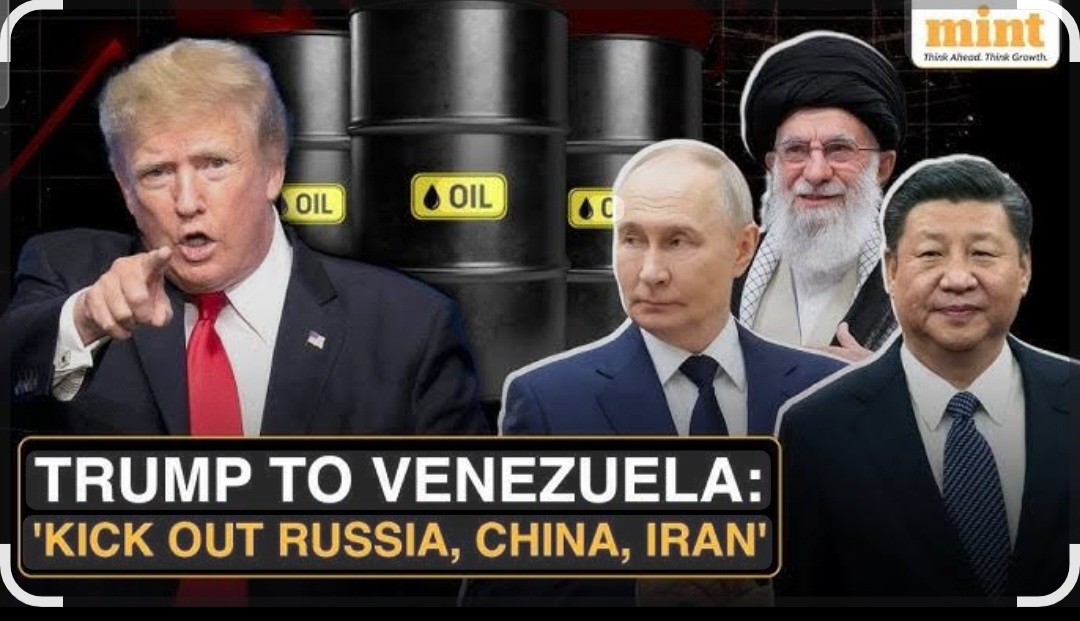
The experiences of Iran and Venezuela offer a cautionary example. Both countries have positioned themselves as defiant challengers to Western influence, often invoking anti-imperialist rhetoric to consolidate domestic authority. Yet when sanctions tightened and internal crises deepened, the much-touted backing of powerful allies such as Russia and China proved limited in practice. Diplomatic statements and symbolic gestures rarely translate into decisive rescue when the strategic costs are high.
In many respects, the Sahel is becoming the newest chessboard in the unfolding rivalry between Russia and the West. The region’s fragile states, struggling with terrorism, economic distress, and weak institutions, now find themselves at the intersection of competing geopolitical interests.
For the juntas governing Mali, Burkina Faso, and Niger, the embrace of Moscow has been framed as a break from Western paternalism. Yet the strategic risks of relying too heavily on a single external partner are significant. Unlike Iran and Venezuela, which possess vast oil resources that cushion the impact of sanctions and economic isolation, the Sahelian economies lack such buffers.
The limits of anti-Western posturing are therefore far sharper in this context. Iran and Venezuela at least had economic leverage and decades of state infrastructure before confronting global pressure. The Sahel’s military regimes do not enjoy similar advantages. Betting national stability on geopolitical confrontation without economic resilience could prove far more destabilising.
The presence of Russian-linked security contractors, from Wagner’s earlier operations to successor entities such as Redut, illustrates another dimension of the challenge. These deployments offer short-term tactical support but rarely substitute for strong national armies, effective governance, and regional cooperation. Security outsourced to foreign actors tends to be transactional rather than transformational.
Yet the deeper issue goes beyond any single partnership. Africa’s geopolitical dilemma is not simply about Russia, the West, or China. It reflects a recurring pattern in which African states seek external protectors rather than invest in internal strength.
From colonial dependency to Cold War alignments and today’s renewed great-power competition, the continent has often oscillated between competing patrons. Rejecting Western influence only to embrace Russian or Chinese influence does not constitute genuine liberation; it merely replaces one form of dependency with another.
What Africa needs instead is strategic autonomy. For the Sahel, this moment of geopolitical turbulence could become an opportunity to rethink its development trajectory. Strengthening governance, rebuilding public institutions, and addressing the root causes of insecurity: corruption, marginalisation, and economic exclusion, would offer far more durable stability than reliance on external military support.
Coups, after all, are symptoms of governance failure, not solutions to it. The region’s demographic reality makes this urgency even greater. With one of the youngest populations in the world, the Sahel cannot afford the economic stagnation that often accompanies geopolitical isolation. If instability persists, the consequences will be felt not only within the region but across West Africa and beyond through migration, economic disruption, and expanding insecurity.
A stronger African security architecture is therefore essential. The limitations exposed in ECOWAS responses, the underutilisation of the African Union’s standby mechanisms, and the fragility of regional intelligence cooperation all point to the same conclusion: Africa must build more credible collective security systems.
Equally important is the need for an assertive but balanced African foreign policy. The Sahel’s pivot toward Russia is partly a reaction against perceived Western paternalism. Yet the answer to unequal partnerships is not to substitute one patron for another. It is to negotiate from a position of confidence and independence.
Africa should engage with all global actors: East and West alike, in line with clear national and regional interests. Trade, investment, technology transfer, and security cooperation are welcome from any partner that respects African sovereignty. What should be avoided is ideological alignment that turns African states into frontline proxies in someone else’s strategic contest.
The Sahel today stands at a crossroads. Its choices will shape not only its own future but also the broader trajectory of governance and security across West Africa. If there is one lesson from Iran, Venezuela, Syria and other states caught in great-power rivalries, it is this: external patrons may offer support, but they rarely guarantee salvation. Therefore, Africa’s long-term stability will depend less on the promises of distant powers and more on the strength of its own institutions, leadership, and collective resolve.
Oumarou Sanou is a social critic, Pan-African observer and researcher focusing on governance, security, and political transitions in the Sahel. He writes on geopolitics, regional stability, and African leadership dynamics. Contact: sanououmarou386@gmail.com