
Esther Oseyiomon
Nigeria’s push toward the establishment of state police appears to be gathering renewed momentum as governors across the federation signalled growing confidence in ongoing consultations but insisted that any eventual framework must protect constitutional order, federal balance and citizens’ rights.
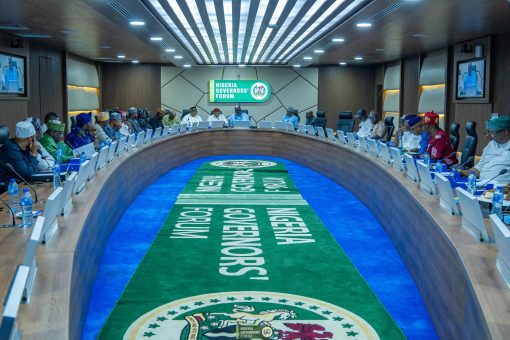
The position emerged at the end of the meeting of the 36 state governors under the Nigeria Governors’ Forum (NGF), held in Abuja from late Wednesday into the early hours of Thursday, where state policing again took centre stage amid continued national conversations on security reforms.
Reading the communiqué after the meeting, Governor Dapo Abiodun said the governors received a detailed briefing from the NGF Secretariat alongside a delegation of state Attorneys-General on ongoing efforts to develop legal and institutional frameworks for the proposed state police structure.
According to the communiqué, the governors reviewed progress made through dedicated consultations involving state chief law officers and constitutional experts to examine proposed amendments that would provide the legal foundation for decentralised policing in Nigeria.
The governors noted that while the conversation around state police has advanced significantly, the process must remain deliberate and guided by constitutional principles to avoid creating structures that could undermine national cohesion or weaken protections guaranteed to citizens.
They maintained that any eventual model must reflect the realities of Nigeria’s federal system while ensuring accountability, clear lines of authority and effective oversight mechanisms capable of preventing abuse and protecting public trust.
Although no timeline was announced for implementation, the meeting reflected increasing alignment among state governments on the need to rethink Nigeria’s current security architecture in response to evolving security challenges across different regions of the country.
The governors further emphasised that the objective is not merely to create additional security institutions but to build a policing framework that improves responsiveness to local threats while remaining consistent with democratic principles and the rule of law.
The renewed engagement signals what observers describe as another significant step in Nigeria’s long-running debate over security decentralisation, with attention now shifting to how proposed constitutional amendments and stakeholder consultations will shape the future of state policing in the country.