
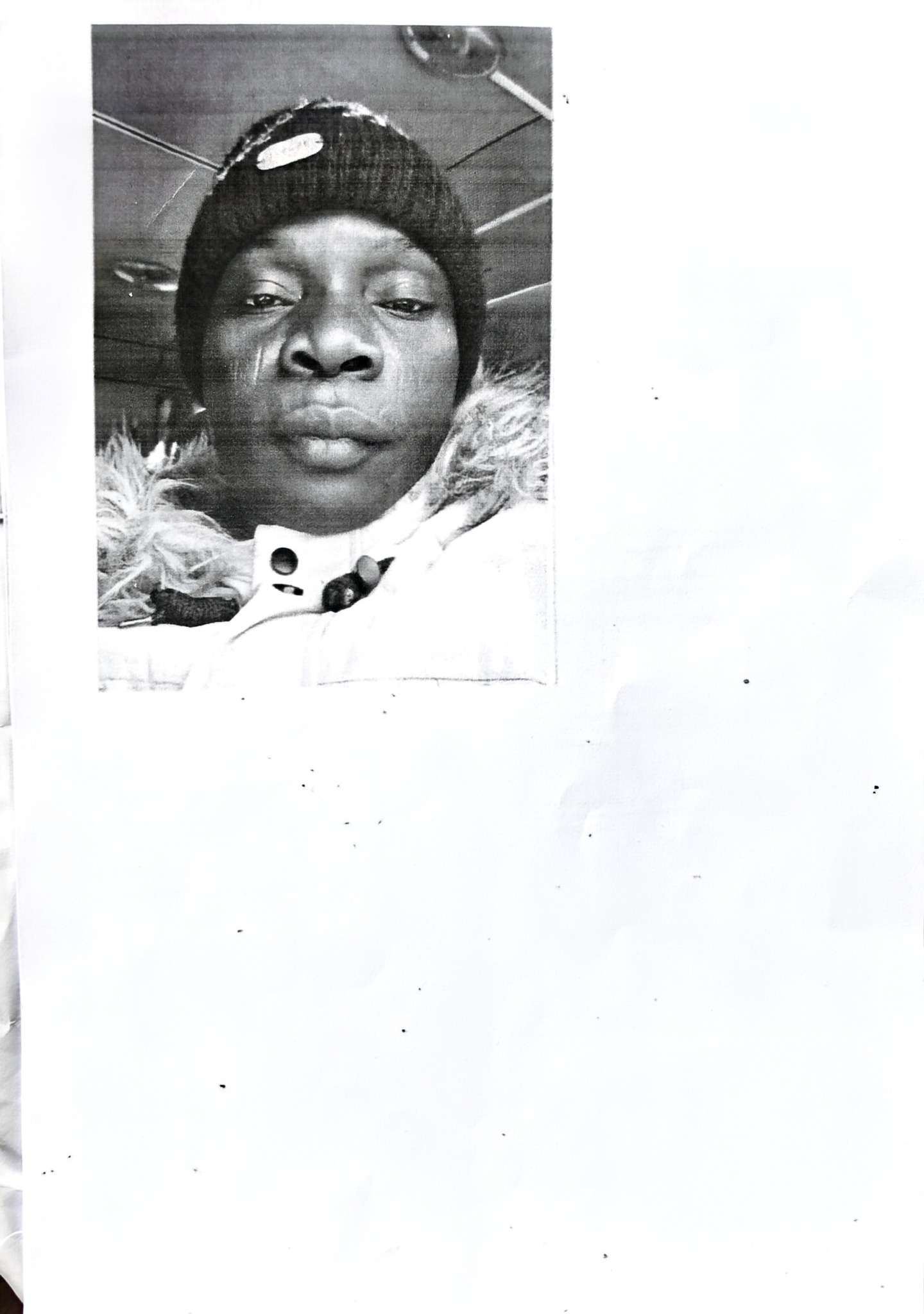
• Father of three loses contact with family after allegedly being recruited for civilian employment
•Questions Russian military contract, urges FG to investigate suspected trafficking networks
• Seeks verification of 13 Nigerians reportedly killed fighting for Russia in Ukraine
Jude Johnson
A civil society organisation, the Initiative for Media Development and Social Impact (IMEDSI), has called on the Federal Government to urgently intervene in the disappearance of a 42-year-old Nigerian father of three, Ramon Jamiu Babatunde, who allegedly ended up in Russian military service after travelling to the country in search of civilian employment.
The organisation also demanded that the Russian authorities provide a comprehensive account of Nigerians recruited into the country’s war against Ukraine, following reports identifying at least 13 Nigerians allegedly killed while serving with Russian forces.
In a statement issued in Abuja on Friday and signed by Ms Onose Oseyi, IMEDSI expressed concern that Babatunde, who left his family in Ibadan, Oyo State, had not communicated with his wife since November 27, 2025, leaving her and their three children uncertain about his whereabouts and condition.
The group said the circumstances surrounding his disappearance raised serious questions about allegations that Nigerians and other economically vulnerable Africans were being recruited into Russia’s military through deceptive employment offers and potentially coercive contractual arrangements.
According to the organisation, documents made available to it indicated that Babatunde travelled to Russia in October 2025 after allegedly being recruited through a travel intermediary for what his family believed was civilian employment.
However, the documents reportedly showed that he was subsequently presented with a one-year military contract with the Russian Ministry of Defence.
IMEDSI said: “For almost a year, three Nigerian children have lived without knowing whether their father is coming home. Their mother has been left to confront an agonising uncertainty that no family should endure.
“This is no longer simply a question about foreign military recruitment. It is a test of Nigeria’s responsibility to protect its citizens and Russia’s willingness to account for foreign nationals recruited into its armed forces.”
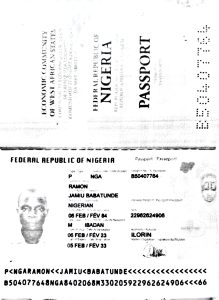
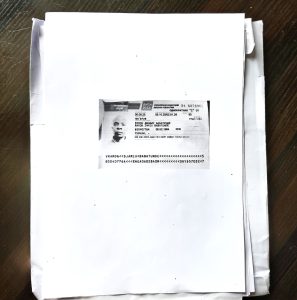
The organisation disclosed that Babatunde’s Russian visa, issued on September 30, 2025, was a single-entry tourist visa valid from October 5, 2025, to January 2, 2026.
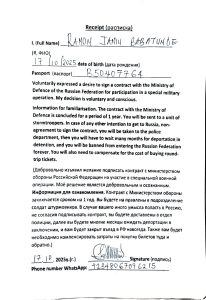
It added that another document dated October 17, 2025, bearing his name and passport details, purportedly recorded his agreement to a one-year military contract with the Russian Ministry of Defence.
Although the document described the enlistment as voluntary, IMEDSI said it contained provisions indicating that the recruit would be assigned to an assault unit. That refusal to sign could result in police detention, prolonged deportation proceedings, permanent exclusion from Russia, and repayment of travel expenses.
The organisation acknowledged that it had not independently authenticated the document or established the precise circumstances under which Babatunde allegedly signed it.
It, however, maintained that the apparent contradiction between voluntary enlistment and the threatened consequences of refusal raised fundamental questions about whether genuine consent had been obtained.
“A military contract signed under the threat of detention, deportation and financial penalties cannot simply be accepted at face value as evidence of free consent,” the group stated.
“If these documents are authentic, the Russian authorities must explain how Babatunde was recruited, the circumstances of his enlistment, where he was deployed and why his family has been unable to reach him.”
IMEDSI further observed that the purported contract specified a one-year term beginning in October 2025, which would ordinarily have elapsed in October 2026 if it took effect as indicated.
It said the family’s continued inability to establish his whereabouts after that period made the situation particularly disturbing. However, the document alone could not establish his present military or legal status.
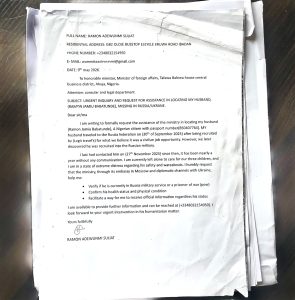
The organisation revealed that Babatunde’s wife, Mrs Adewunmi Suliat Ramon, had petitioned the Minister of Foreign Affairs on May 9, 2026, seeking urgent government intervention.
In the petition, she reportedly requested assistance in determining whether her husband remained in Russian military service, had been injured, was being held as a prisoner of war or had otherwise been accounted for.
She also explained that she had been left to care for their three children while enduring prolonged uncertainty over his safety.
IMEDSI urged the Ministry of Foreign Affairs to provide the family with a substantive update and designate a consular officer to pursue the matter.
“Ramon Babatunde is not a military statistic. He is a Nigerian citizen, a husband and a father. His family deserves more than uncertainty, and his country owes him more than silence,” it declared.
The organisation also raised concerns over reports identifying at least 13 individuals described as Nigerians who allegedly died while serving with Russian forces in Ukraine.
It said the names emerged from published reports, foreign intelligence claims and photographs circulated online, although their identities, nationalities, military affiliations and reported deaths had not all been independently verified.
Those identified in the materials reviewed by the organisation included Hamzat Kazeem Kolawole, Mbah Stephen Udoka, Ayebusiwa Olabode Victor, Adam Anas, Akinlawon Tunde Quyuum, Abugu Stanley Onyeka and Balogun Ridwan Adisa.
Others were Adekunle Adaramola, Abdoulaye Issaka Ismael, Agbo Moses Omale, Adamu Abdulai Ismail, Fajobi Taiwo Omoniyi and an individual identified only as Mikael, whose surname remained unconfirmed.
IMEDSI called on the Federal Government to authenticate the reports, reconcile discrepancies in the identities and establish whether the individuals were Nigerian citizens who served with Russian forces.
It said families should not be left to discover the possible deaths of their relatives through social media photographs, foreign intelligence disclosures or unofficial casualty lists.
“Behind every name is a family that deserves the truth. If these Nigerians have died, their relatives must be officially informed and given the necessary consular assistance. If any of the reports are inaccurate, the record must be corrected,” the organisation stated.
“Nigeria must not wait for Ramon Babatunde’s name to appear on another list before taking decisive action.”
Citing findings published by Amnesty International on September 10, 2026, IMEDSI said investigations had documented cases involving foreign nationals allegedly recruited into Russian military service through misleading employment promises, coercive arrangements and exploitative practices.
According to the group, Amnesty reported instances in which individuals expecting civilian employment were subsequently drawn into military service, sometimes after signing documents they could not adequately understand.
It added that the human rights organisation concluded that some documented recruitment practices amounted to human trafficking.
IMEDSI also referred to findings attributed to INPACT/All Eyes on Wagner, which reportedly identified 1,417 African nationals from 35 countries recruited into Russian forces between 2023 and mid-2025, including 316 recorded fatalities.
It noted that the researchers acknowledged limitations in their database.
Similarly, the organisation cited claims attributed to Ukrainian military intelligence in May 2026 that at least 215 Nigerians had signed Russian military contracts, with at least 25 reportedly dead or missing.
It, however, stressed that the figures required independent verification, particularly those originating from a party to the conflict.
“The desperation for employment must never become a pipeline through which Africans are channelled into foreign battlefields,” IMEDSI warned.
“Our citizens should not travel abroad in search of livelihoods only to become casualties of wars they never intended to fight.”
The organisation acknowledged previous warnings issued by the Federal Government against deceptive recruitment into foreign military conflicts but insisted that public advisories must be followed by concrete diplomatic and consular action.
It urged the Ministry of Foreign Affairs, working through Nigeria’s Embassy in Moscow and the Russian Embassy in Abuja, to immediately request an official account of Babatunde’s whereabouts, military status and condition.
Where necessary, it said Nigeria should engage the appropriate Ukrainian authorities and the International Committee of the Red Cross to establish whether he was detained, receiving medical treatment or being held as a prisoner of war.
IMEDSI also demanded a comprehensive accounting of Nigerians reportedly recruited into Russian military service, including those serving, wounded, missing, captured, deceased or seeking repatriation.
The group called on the National Agency for the Prohibition of Trafficking in Persons (NAPTIP), the Nigeria Immigration Service and the Nigeria Police Force to investigate travel agencies, employment intermediaries and suspected recruitment networks involved in misleading overseas employment arrangements.
It maintained that Nigerians found to have been recruited through deception or coercion should receive appropriate protection and assistance as potential trafficking victims, while those responsible should face prosecution.
The organisation further urged the African Union and the Economic Community of West African States (ECOWAS) to coordinate diplomatic engagement, share intelligence on suspected recruitment networks, and establish mechanisms to identify and assist affected African nationals.
It noted that Kenya and Ghana had pursued diplomatic discussions with Moscow over the recruitment and reported deaths of their citizens, describing such engagements as examples of the importance of sustained government intervention.
“If other African governments can demand answers and negotiate protections for their citizens, Nigeria must demonstrate equal determination,” it stated.
“A travel warning is necessary, but a warning alone cannot locate a missing citizen, rescue an exploited worker or provide answers to a grieving family.”
IMEDSI also urged the Russian Federation to cooperate with legitimate consular inquiries, disclose verifiable information about affected Nigerian nationals and investigate credible allegations of recruitment through deception, coercion or trafficking.
It maintained that its concerns should not be interpreted as opposition to Russia or support for any competing geopolitical bloc.
“This is not about choosing between Moscow and Washington, or between Russia and Ukraine. It is about defending African lives and insisting that every government, regardless of its geopolitical alignment, respects the rights and dignity of our citizens,” the organisation said.
“Africa’s economic vulnerability must never become a reservoir from which foreign wars draw expendable manpower.”
Returning to Babatunde’s case, IMEDSI appealed to President Bola Ahmed Tinubu’s administration to treat his disappearance as an urgent humanitarian and consular priority.
It insisted that while the broader recruitment allegations and reported casualty figures required investigation, the immediate concern was establishing the fate of a Nigerian father whose family had endured almost a year without reliable information.
“For Mrs Adewunmi Suliat Ramon and her three children, this is not an abstract debate about geopolitics. It is the absence of a husband and father, the unanswered calls, the uncertainty and the fear of what each passing day might bring,” it stated.
The organisation added: “Where is Ramon Jamiu Babatunde? Is he alive? Is he injured? Is he being held somewhere? Is he still in Russian military service?
“These are questions the Nigerian government must formally put to Moscow and pursue until credible answers are obtained.
“If Ramon is alive, every lawful effort must be made to secure his safety and return. If he has died, his family deserves the truth, official confirmation and the dignity of a proper accounting.
“No Nigerian family should have to search alone for a loved one swallowed by another country’s war.
“African lives are not expendable. Nigerian lives matter. Ramon Babatunde’s wife and children deserve answers. Nigeria must act.”
Group Demands Answers over Missing Father of Three, Other Nigerians Killed in Russia’s War
• Father of three loses contact with family after allegedly being recruited for civilian employment
•Group questions Russian military contract, urges FG to investigate suspected trafficking networks*
• Seeks verification of 13 Nigerians reportedly killed fighting for Russia in Ukraine
A civil society organisation, the Initiative for Media Development and Social Impact (IMEDSI), has called on the Federal Government to urgently intervene in the disappearance of a 42-year-old Nigerian father of three, Ramon Jamiu Babatunde, who allegedly ended up in Russian military service after travelling to the country in search of civilian employment.
The organisation also demanded that the Russian authorities provide a comprehensive account of Nigerians recruited into the country’s war against Ukraine, following reports identifying at least 13 Nigerians allegedly killed while serving with Russian forces.
In a statement issued in Abuja on Friday and signed by Ms Onose Oseyi, IMEDSI expressed concern that Babatunde, who left his family in Ibadan, Oyo State, had not communicated with his wife since November 27, 2025, leaving her and their three children uncertain about his whereabouts and condition.
The group said the circumstances surrounding his disappearance raised serious questions about allegations that Nigerians and other economically vulnerable Africans were being recruited into Russia’s military through deceptive employment offers and potentially coercive contractual arrangements.
According to the organisation, documents made available to it indicated that Babatunde travelled to Russia in October 2025 after allegedly being recruited through a travel intermediary for what his family believed was civilian employment.
However, the documents reportedly showed that he was subsequently presented with a one-year military contract with the Russian Ministry of Defence.
IMEDSI said: “For almost a year, three Nigerian children have lived without knowing whether their father is coming home. Their mother has been left to confront an agonising uncertainty that no family should endure.
“This is no longer simply a question about foreign military recruitment. It is a test of Nigeria’s responsibility to protect its citizens and Russia’s willingness to account for foreign nationals recruited into its armed forces.”
The organisation disclosed that Babatunde’s Russian visa, issued on September 30, 2025, was a single-entry tourist visa valid from October 5, 2025, to January 2, 2026.
It added that another document dated October 17, 2025, bearing his name and passport details, purportedly recorded his agreement to a one-year military contract with the Russian Ministry of Defence.
Although the document described the enlistment as voluntary, IMEDSI said it contained provisions indicating that the recruit would be assigned to an assault unit. That refusal to sign could result in police detention, prolonged deportation proceedings, permanent exclusion from Russia, and repayment of travel expenses.
The organisation acknowledged that it had not independently authenticated the document or established the precise circumstances under which Babatunde allegedly signed it.
It, however, maintained that the apparent contradiction between voluntary enlistment and the threatened consequences of refusal raised fundamental questions about whether genuine consent had been obtained.
“A military contract signed under the threat of detention, deportation and financial penalties cannot simply be accepted at face value as evidence of free consent,” the group stated.
“If these documents are authentic, the Russian authorities must explain how Babatunde was recruited, the circumstances of his enlistment, where he was deployed and why his family has been unable to reach him.”
IMEDSI further observed that the purported contract specified a one-year term beginning in October 2025, which would ordinarily have elapsed in October 2026 if it took effect as indicated.
It said the family’s continued inability to establish his whereabouts after that period made the situation particularly disturbing. However, the document alone could not establish his present military or legal status.
The organisation revealed that Babatunde’s wife, Mrs Adewunmi Suliat Ramon, had petitioned the Minister of Foreign Affairs on May 9, 2026, seeking urgent government intervention.
In the petition, she reportedly requested assistance in determining whether her husband remained in Russian military service, had been injured, was being held as a prisoner of war or had otherwise been accounted for.
She also explained that she had been left to care for their three children while enduring prolonged uncertainty over his safety.
IMEDSI urged the Ministry of Foreign Affairs to provide the family with a substantive update and designate a consular officer to pursue the matter.
“Ramon Babatunde is not a military statistic. He is a Nigerian citizen, a husband and a father. His family deserves more than uncertainty, and his country owes him more than silence,” it declared.
The organisation also raised concerns over reports identifying at least 13 individuals described as Nigerians who allegedly died while serving with Russian forces in Ukraine.
It said the names emerged from published reports, foreign intelligence claims and photographs circulated online, although their identities, nationalities, military affiliations and reported deaths had not all been independently verified.
Those identified in the materials reviewed by the organisation included Hamzat Kazeem Kolawole, Mbah Stephen Udoka, Ayebusiwa Olabode Victor, Adam Anas, Akinlawon Tunde Quyuum, Abugu Stanley Onyeka and Balogun Ridwan Adisa.
Others were Adekunle Adaramola, Abdoulaye Issaka Ismael, Agbo Moses Omale, Adamu Abdulai Ismail, Fajobi Taiwo Omoniyi and an individual identified only as Mikael, whose surname remained unconfirmed.
IMEDSI called on the Federal Government to authenticate the reports, reconcile discrepancies in the identities and establish whether the individuals were Nigerian citizens who served with Russian forces.
It said families should not be left to discover the possible deaths of their relatives through social media photographs, foreign intelligence disclosures or unofficial casualty lists.
“Behind every name is a family that deserves the truth. If these Nigerians have died, their relatives must be officially informed and given the necessary consular assistance. If any of the reports are inaccurate, the record must be corrected,” the organisation stated.
“Nigeria must not wait for Ramon Babatunde’s name to appear on another list before taking decisive action.”
Citing findings published by Amnesty International on September 10, 2026, IMEDSI said investigations had documented cases involving foreign nationals allegedly recruited into Russian military service through misleading employment promises, coercive arrangements and exploitative practices.
According to the group, Amnesty reported instances in which individuals expecting civilian employment were subsequently drawn into military service, sometimes after signing documents they could not adequately understand.
It added that the human rights organisation concluded that some documented recruitment practices amounted to human trafficking.
IMEDSI also referred to findings attributed to INPACT/All Eyes on Wagner, which reportedly identified 1,417 African nationals from 35 countries recruited into Russian forces between 2023 and mid-2025, including 316 recorded fatalities.
It noted that the researchers acknowledged limitations in their database.
Similarly, the organisation cited claims attributed to Ukrainian military intelligence in May 2026 that at least 215 Nigerians had signed Russian military contracts, with at least 25 reportedly dead or missing.
It, however, stressed that the figures required independent verification, particularly those originating from a party to the conflict.
“The desperation for employment must never become a pipeline through which Africans are channelled into foreign battlefields,” IMEDSI warned.
“Our citizens should not travel abroad in search of livelihoods only to become casualties of wars they never intended to fight.”
The organisation acknowledged previous warnings issued by the Federal Government against deceptive recruitment into foreign military conflicts but insisted that public advisories must be followed by concrete diplomatic and consular action.
It urged the Ministry of Foreign Affairs, working through Nigeria’s Embassy in Moscow and the Russian Embassy in Abuja, to immediately request an official account of Babatunde’s whereabouts, military status and condition.
Where necessary, it said Nigeria should engage the appropriate Ukrainian authorities and the International Committee of the Red Cross to establish whether he was detained, receiving medical treatment or being held as a prisoner of war.
IMEDSI also demanded a comprehensive accounting of Nigerians reportedly recruited into Russian military service, including those serving, wounded, missing, captured, deceased or seeking repatriation.
The group called on the National Agency for the Prohibition of Trafficking in Persons (NAPTIP), the Nigeria Immigration Service and the Nigeria Police Force to investigate travel agencies, employment intermediaries and suspected recruitment networks involved in misleading overseas employment arrangements.
It maintained that Nigerians found to have been recruited through deception or coercion should receive appropriate protection and assistance as potential trafficking victims, while those responsible should face prosecution.
The organisation further urged the African Union and the Economic Community of West African States (ECOWAS) to coordinate diplomatic engagement, share intelligence on suspected recruitment networks, and establish mechanisms to identify and assist affected African nationals.
It noted that Kenya and Ghana had pursued diplomatic discussions with Moscow over the recruitment and reported deaths of their citizens, describing such engagements as examples of the importance of sustained government intervention.
“If other African governments can demand answers and negotiate protections for their citizens, Nigeria must demonstrate equal determination,” it stated.
“A travel warning is necessary, but a warning alone cannot locate a missing citizen, rescue an exploited worker or provide answers to a grieving family.”
IMEDSI also urged the Russian Federation to cooperate with legitimate consular inquiries, disclose verifiable information about affected Nigerian nationals and investigate credible allegations of recruitment through deception, coercion or trafficking.
It maintained that its concerns should not be interpreted as opposition to Russia or support for any competing geopolitical bloc.
“This is not about choosing between Moscow and Washington, or between Russia and Ukraine. It is about defending African lives and insisting that every government, regardless of its geopolitical alignment, respects the rights and dignity of our citizens,” the organisation said.
“Africa’s economic vulnerability must never become a reservoir from which foreign wars draw expendable manpower.”
Returning to Babatunde’s case, IMEDSI appealed to President Bola Ahmed Tinubu’s administration to treat his disappearance as an urgent humanitarian and consular priority.
It insisted that while the broader recruitment allegations and reported casualty figures required investigation, the immediate concern was establishing the fate of a Nigerian father whose family had endured almost a year without reliable information.
“For Mrs Adewunmi Suliat Ramon and her three children, this is not an abstract debate about geopolitics. It is the absence of a husband and father, the unanswered calls, the uncertainty and the fear of what each passing day might bring,” it stated.
The organisation added: “Where is Ramon Jamiu Babatunde? Is he alive? Is he injured? Is he being held somewhere? Is he still in Russian military service?
“These are questions the Nigerian government must formally put to Moscow and pursue until credible answers are obtained.
“If Ramon is alive, every lawful effort must be made to secure his safety and return. If he has died, his family deserves the truth, official confirmation and the dignity of a proper accounting.
“No Nigerian family should have to search alone for a loved one swallowed by another country’s war.
“African lives are not expendable. Nigerian lives matter. Ramon Babatunde’s wife and children deserve answers. Nigeria must act.”