
By Umarou Sanou
There is a particular kind of deception that is worse than a lie. It is the lie dressed up as liberation. That is precisely what Russia is selling to the people of the Sahel, and Africa must not buy it.
Africa is no stranger to foreign influence. From colonialism to the Cold War, the continent has too often been cast as an arena rather than an actor. But what is unfolding today in the Sahel is not a new chapter of history; it is the same old story, repackaged for the digital age. Russia’s growing footprint across Mali, Burkina Faso and Niger is marketed as solidarity, anti-imperialism, and sovereign self-determination. Beneath those slogans, however, lies a coldly calculated agenda: shaping African public opinion to serve Moscow’s geopolitical interests, above all, its war in Ukraine, while offering precious little in return.
The uncomfortable truth is this: Russia has far more to gain from Africa than Africa has to gain from Russia.
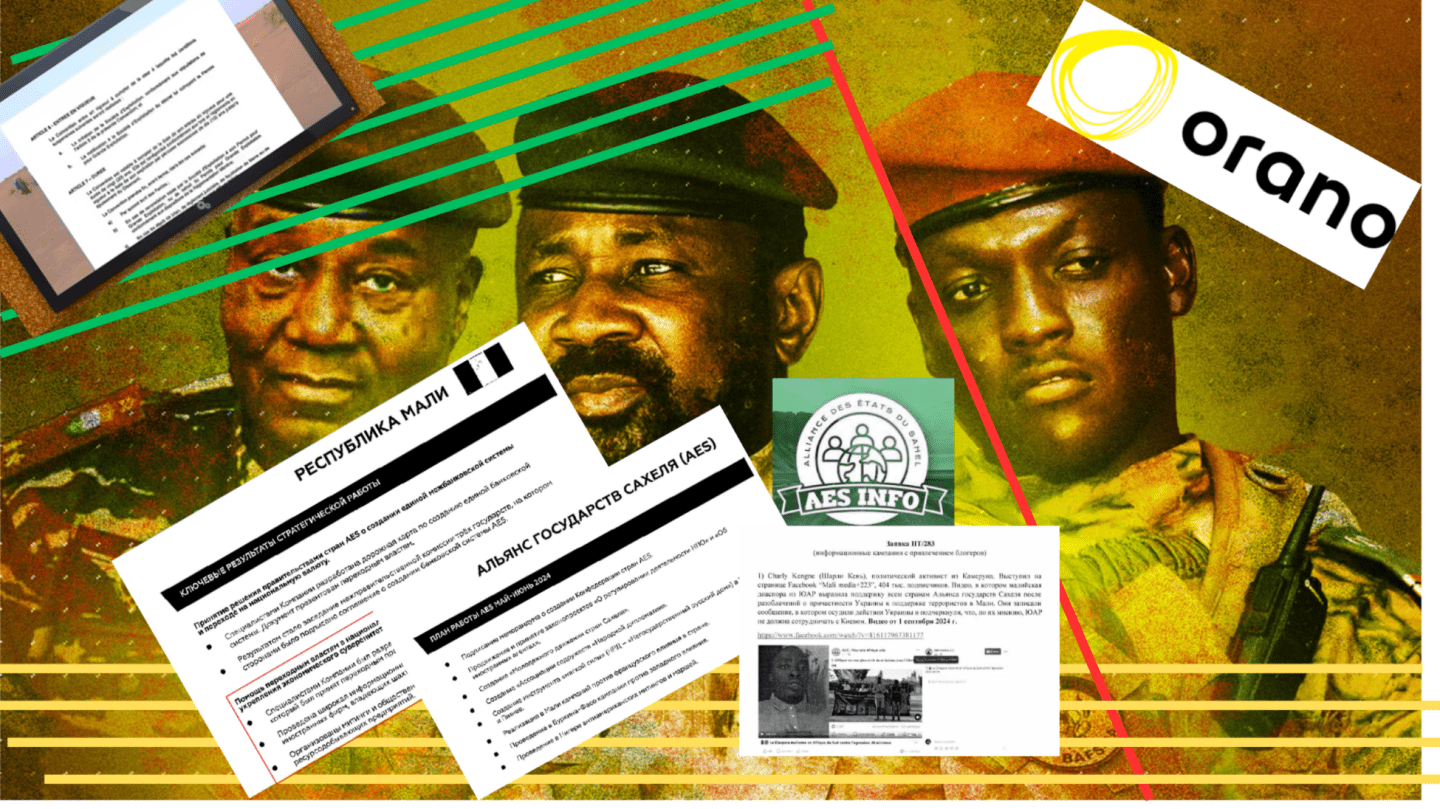
The evidence is now public. On March 27, the international investigative network Forbidden Stories published internal leaks attributed to the SVR, Russia’s foreign intelligence service, exposing a sweeping, structured strategy to “reformat the African space” by building a belt of friendly regimes stretching from the Atlantic to the Red Sea. That is not a partnership. That is a blueprint for domination. Africa is not seen as a partner; it is a theatre.
At the centre of this theatre sits the Alliance of Sahel States, comprising Mali, Burkina Faso and Niger, presented as a proud symbol of African sovereignty and resistance. In reality, it risks becoming a geopolitical outpost in Russia’s contest with the West. The rhetoric is bold. The outcomes remain thin. Security has not improved. Terrorism has not receded. Economic transformation is nowhere in sight. What has grown, instead, is a sophisticated machinery of influence.
The methods are no longer secret. Journalists were approached under the guise of partnerships. They offered payment for “advertorials” between 50,000 and 200,000 CFA francs per publication, roughly a month’s salary, to place sponsored propaganda in financially fragile newsrooms. One editor in Chad, Olivier Monodji of Le Pays, accepted what he believed was a legitimate collaboration and ended up spending four months in prison. “It’s because of the Russians that I spent four months in prison; I was set up,” he told Forbidden Stories. This is not solidarity. This is predation.
The money flows deeper still. Internal documents from “The Company”: the SVR’s operational network lists more than 700 articles commissioned from West African media outlets between June and October 2024, at rates of $250 to $700 per article. Their purpose was uniform: to promote the AES, legitimise military juntas, and discredit Western presence on the continent. Separately, $12,000 was allocated for a conference in Dakar featuring a Guinean reggae star to spread what the Russians themselves describe as “anti-Ukrainian narratives.” African artists. African voices. Hijacked to serve a war that has nothing to do with Africa.
This is the heart of the scandal. Russia is not fighting for African sovereignty. It is fighting its own war in Ukraine, and it needs Africa as a diplomatic shield, a source of raw materials, and a propaganda front. Leaked strategy documents show that information campaigns were designed to discredit foreign mining companies, demonstrations in favour of nationalisation were orchestrated, and contracts with Western, Turkish, Chinese and Australian firms were targeted for renegotiation. Yet Russia has struggled to get any meaningful economic project off the ground and has been drawn into illicit mining instead. The so-called liberator cannot feed itself.
Beyond governments, the targets of this machine include civil society organisations, independent media, and youth movements: the very structures that protect African citizens from abuse of power. Tournons la Page, a citizen network active in 16 African countries and dedicated to promoting democratic transitions, is explicitly listed in internal documents as a “pro-Western NGO” to be “blocked” under a foreign agents law. When Russia targets democracy advocates, it is not fighting neo-colonialism. It is practising it.
And yet, the machine is not invincible. Its greatest weakness is the same as its greatest strength; it depends entirely on perception. Senegal resisted. At a youth conference in Bamako aimed at recruiting delegates to endorse AES expansion, Senegalese participants refused to sign the closing statement, calling it “unacceptable.” African agency is real, and it is stronger than Moscow calculates.
The deeper vulnerability, however, is not foreign. It is domestic. Weak institutions, underfunded media ecosystems, and limited digital literacy create fertile ground for manipulation. Addressing those gaps is as urgent as countering Russian narratives. Journalists must resist financial inducements. Youth must learn to question and verify. Governments must invest in media literacy and transparent communication.
Russia’s narratives are soap bubbles; colourful, attractive, and easy to absorb. But like all bubbles, they burst on contact with reality.
Africa stands at a crossroads. It can remain at the stage where others project their ambitions. Or it can become the actor: sovereign, clear-eyed, and guided by its own interests. That choice should not be difficult.
Africa does not need another patron. It needs clarity, sovereignty, and strategic discipline. The documents are there. The methods are exposed. The mask has fallen.
It is time for Africa to look away from the mirror that Russia holds up — and find its own reflection.
Umarou Sanou is a social critic, Pan-African observer, and researcher focusing on governance, security, and political transitions in the Sahel. He writes on geopolitics, regional stability, and African leadership dynamics. Contact: sanououmarou386@gmail.com