
Esther Oseyiomon
The National Counter Terrorism Centre (NCTC) and international partners have called for stronger prevention measures, intelligence sharing and cross-border cooperation to curb the expansion of insurgencies and armed groups in Nigeria’s North-West and North-Central regions.
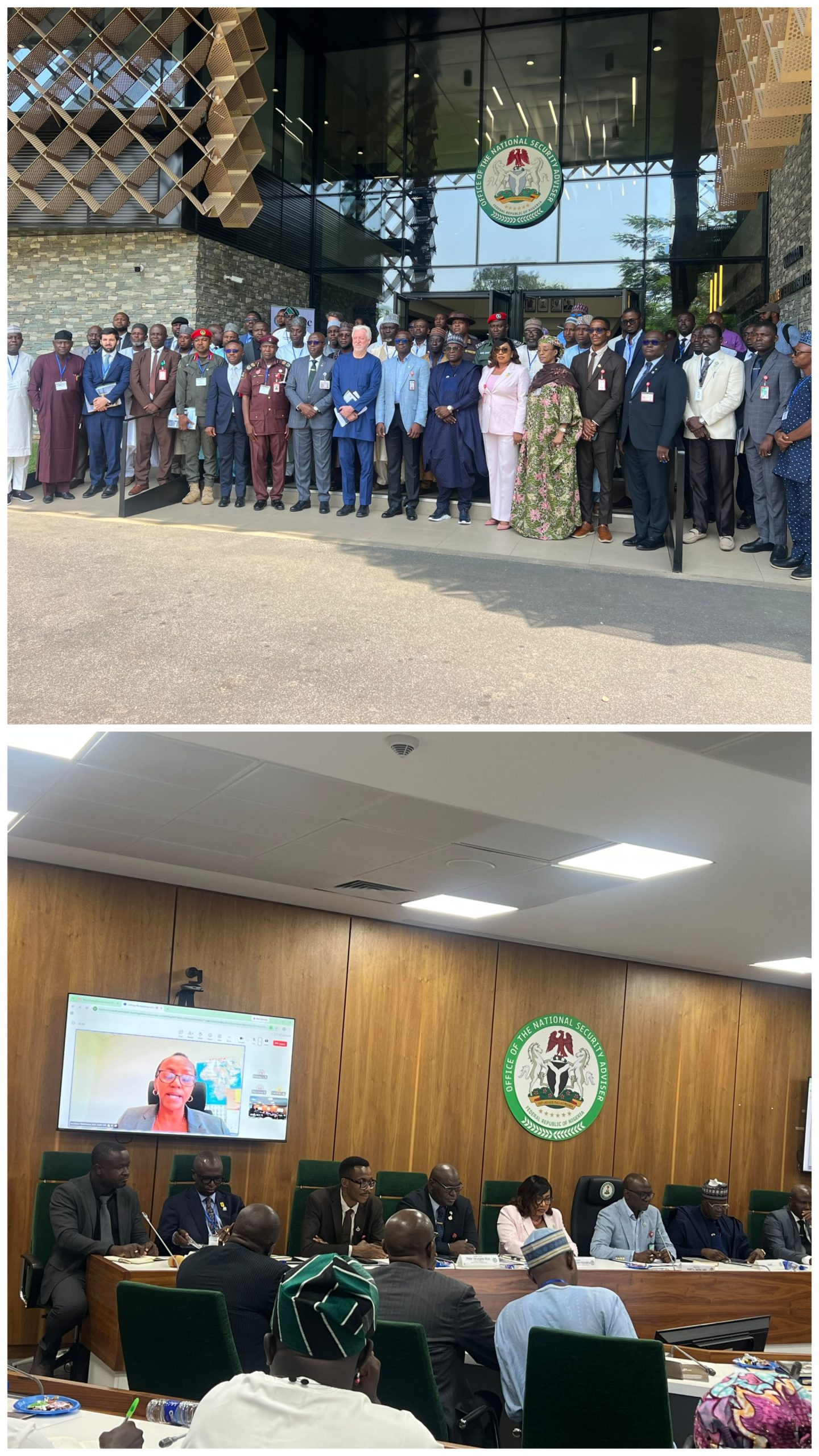
The National Coordinator of the NCTC, Major General Adamu Laka, made the call on Wednesday at a policy roundtable in Abuja on curbing insurgency expansion in the two regions, organised in collaboration with the Bonn International Centre for Conflict Studies (BICC), Usmanu Danfodiyo University and other international partners.
Laka said military and law-enforcement operations must be complemented by effective governance, community engagement, preventive action and credible rehabilitation and reintegration programmes. He urged participants to develop practical recommendations addressing recruitment, illicit financing, competition over land and resources, and other factors sustaining armed violence.
The Deputy Ambassador of the German Embassy in Nigeria, Mr Johannes Lehne, commended the Nigerian government’s efforts to address insecurity, stressing that security forces alone could not resolve the crisis. He said prevention was more effective and less costly than relying solely on military responses, while emphasising trust between communities and security institutions.
Lehne disclosed that Germany had contributed more than €80 million to the North-West Prevention Facility, launched with the United Nations Development Programme (UNDP). The facility currently operates in Zamfara, Sokoto and Katsina states, with Niger and Kebbi expected to join in its next phase. Its programmes focus on peace structures, early-warning systems, basic services and livelihoods.
He also highlighted the North-West Peace, Security and Development Framework 2026–2030 developed by regional governors, describing it as evidence of local ownership. He said Nigeria’s entry into the Integrated Border Stability Mechanism in September 2026 would strengthen cooperation against cross-border banditry and terrorism, particularly through engagement with neighbouring Benin and Niger.
Speaking at the roundtable, Dr Oyewole Oginni, Senior Researcher at BICC, said armed groups were increasingly forming shifting alliances, sometimes collaborating in kidnappings, transferring victims and sharing ransom proceeds. He identified weapons supply networks, ransom payments and illegal gold mining as important sources of income sustaining armed violence, urging authorities to investigate the wider networks benefiting from these activities.
The African Union representative, Ms Jocelyne Nahimana, called for stronger intelligence sharing, civilian protection and regional cooperation. She highlighted the AU’s strengthened counterterrorism architecture, including the operationalisation of the Peace and Security Council Subcommittee on Counterterrorism and the Continental Strategic Plan of Action on Counter-Terrorism in Africa for 2026–2030, which prioritises intelligence exchange, disruption of terrorist financing and legal and operational cooperation.
Nahimana also disclosed that the AU Commission was developing a continental framework on non-state armed groups, including designated terrorist organisations, to improve understanding and coordination across member states. Consultations for West Africa were scheduled for November 2026, with Nigeria’s NCTC invited to participate.
Meanwhile, Sokoto State Deputy Governor, Alhaji Idris Muhammad Gobir, said his government had committed substantial resources to security infrastructure and welcomed the roundtable as an opportunity for stakeholders to develop practical solutions. The meeting, supported by Germany’s Federal Foreign Office, is expected to produce recommendations on preventing recruitment, disrupting armed-group networks and strengthening disengagement, rehabilitation and reintegration across affected communities.