
•Urges newsrooms to build knowledge, not clicks
Jude Johnson
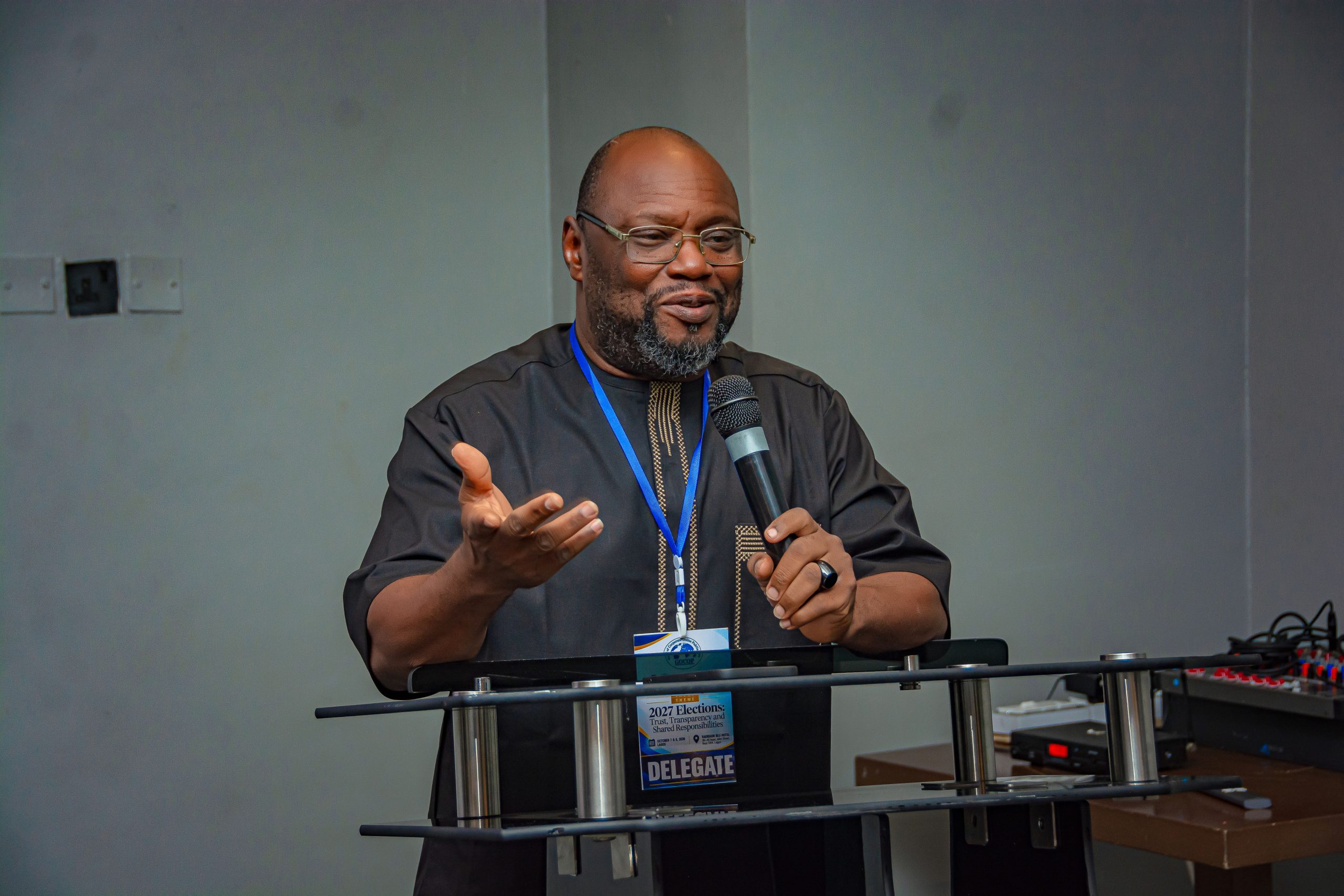
Publisher and Chief Executive Officer of Sundiata Post Media Limited, Dr Maxwell Amuchie, has urged newsrooms, especially in Africa, to move swiftly from mere content production to strategic knowledge creation to survive the disruption of the fast-approaching zero-click era.
Amuchie gave the advice on Wednesday at the training session on the opening day of the 10th Annual Conference of the Guild of Corporate Online Publishers (GOCOP), held at the Radisson Blu Hotel, Ikeja, Lagos.
In a presentation titled, “The Sundiata Post Model: Building the African Newsroom for the Long Term”, Amuchie, who is also a theorist and lead researcher at the Sundiata Post Intelligence Unit (SPIU), Abuja, said the mainstream media would remain relevant, but media houses must become dynamic and adaptive to survive emerging trends and threats.
He explained that newsrooms would continue to report, publish and distribute, but must also conduct relevant research.
“It (newsroom) must analyse, it must develop knowledge, it must preserve knowledge, it must create intellectual capital, and it must build institutional assets that become more valuable over time,” he stated.
Tracing the evolution of media consumption and marketing, Amuchie recalled how digital journalism disrupted print, and how social media and, more recently, Artificial Intelligence (AI) were now disrupting online journalism.
According to him, AI has made it possible for audiences to access a publisher’s work without visiting its website.
“So, what do we do to retain value as publishers and media content experts? What will advertisers use to assess you and give you business? How do you create value to be relevant?” he asked.
He noted that while technology would continue to evolve, the mission of the mainstream media, which is publishing, would remain permanent, stressing that analysis held the key.
“Explain the convergence of forces. Create frameworks to do your work. It may soon not matter whether anybody comes to your website,” he said.
Amuchie outlined what he described as the interlinked pillars of survival in the zero-click era, which he called assets. He listed them as trust, authority, knowledge, intellectual capital, institutional memory, original research, proprietary frameworks, archives, relationships and reputation.
The essence, he said, was that with audiences now able to read a publication’s content without clicking through to its website, and with advertising traditionally tied to site visits, publishers and media entrepreneurs must learn to attract revenue without relying on traffic.
He cited the SquirrelPR RANKED 2026 Report, published in April, which showed a sharp decline in audience traffic across Nigeria’s digital media ecosystem in 2025.
According to the report, traffic fell by 26.2 per cent, from more than one billion visits in 2024 to about 769 million in 2025.
The solution, he counselled, was for the newsroom to evolve from being primarily a content-production organisation into a knowledge-producing institution.
“This does not mean abandoning journalism,” he added.
Earlier, in his welcome address, GOCOP President, Mr Danlami Nmodu, mni, said the training sessions on the opening day were designed to inspire members to recognise their potential.
He said the guild, which already boasts highly respected intellectuals and successful editors, could still produce nationally and globally recognised personalities, including professors, chief executives and even presidents.
“We have latent qualities that can move the society,” he said.

Nmodu advised members to consider specialisation so that their publications would be recognised as leading lights in their sectors and further project the guild.
He also paid glowing tribute to a former President of GOCOP and founder of The Eagle Online, the late Dotun Oladipo, whom he described as a strong pillar of the guild and a friend to all. Members had earlier observed a moment of silence in his honour.
The conference continued on Thursday.