
Esther Oseyiomon
The Federal Government has reaffirmed its commitment to developing indigenous defence technology, strengthening local expertise and reducing dependence on imported solutions as part of efforts to modernise the Armed Forces and improve Nigeria’s response to emerging security threats.
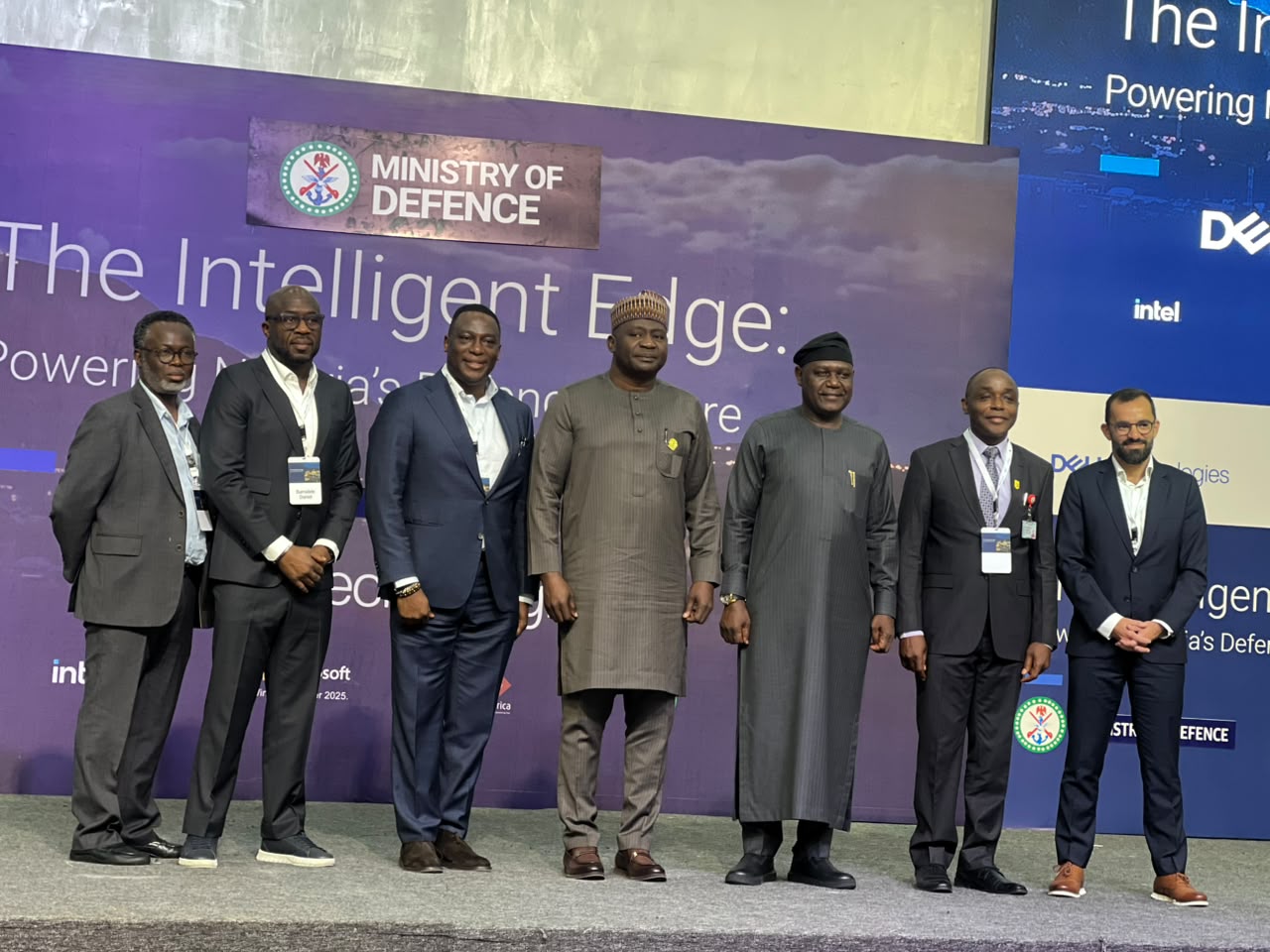
The Minister of Defence, General Christopher Gwabin Musa (rtd.), stated this on Tuesday, November 24, 2026, at the opening of a two-day strategic workshop organised by the Ministry of Defence in partnership with Dell Technologies at the Armed Forces Officers’ Mess, Asokoro, Abuja.
Speaking on the theme, “The Intelligent Edge: Powering Nigeria’s Defence Future,” Musa said artificial intelligence, data analytics and digital systems were changing the nature of modern warfare, making technology essential to operational effectiveness, intelligence gathering and informed military decision-making.
He stressed that Nigeria must move beyond being a consumer of foreign technology to developing the capacity to operate, maintain, adapt and, where possible, manufacture solutions that meet its defence requirements.
The minister urged international technology partners to prioritise knowledge transfer, technical training and the development of indigenous expertise, noting that such investments would strengthen national security while creating opportunities for young Nigerians and supporting broader economic development.
He said the workshop should produce practical recommendations, identify technological and institutional gaps, and establish clear priorities for building a more responsive defence technology system.
Also speaking, the Senior Special Adviser to the Minister on Technology and Innovation, Air Vice Marshal Bulus (rtd.), said the partnership with Dell began in February 2026 at the initiative of the minister, with a focus on knowledge transfer, institutional development and sustainable technology solutions for Nigeria’s defence needs.
Bulus explained that the workshop was deliberately restricted because discussions involved sensitive defence information and classified military infrastructure. He said the arrangement would allow commanders, policymakers and technical experts to examine operational challenges openly while protecting information that should remain confidential.
He added that secure computing, data management, cybersecurity and integrated digital solutions were critical to improving coordination, reducing institutional silos and strengthening the Ministry’s technology ecosystem.
The Country Lead of Dell Technologies Nigeria, Abimbola Owoeye, said technology could reduce the risks faced by military personnel and improve operational decisions, pointing to the growing use of drones, robotics and artificial intelligence by modern armed forces.
Owoeye said the cost of technology should not be measured only by its acquisition price but also by the cost of failing to adopt it. He emphasised the importance of moving from fragmented infrastructure and manual processes to integrated digital platforms, intelligent automation and stronger local capabilities.
He added that data was central to modern intelligence operations, stressing the need for secure systems capable of gathering, processing, storing and analysing information to support faster and more effective decisions.
The two-day workshop is expected to identify practical pathways for adopting advanced technologies, strengthening indigenous capacity and building a secure, integrated digital framework for Nigeria’s defence sector.