
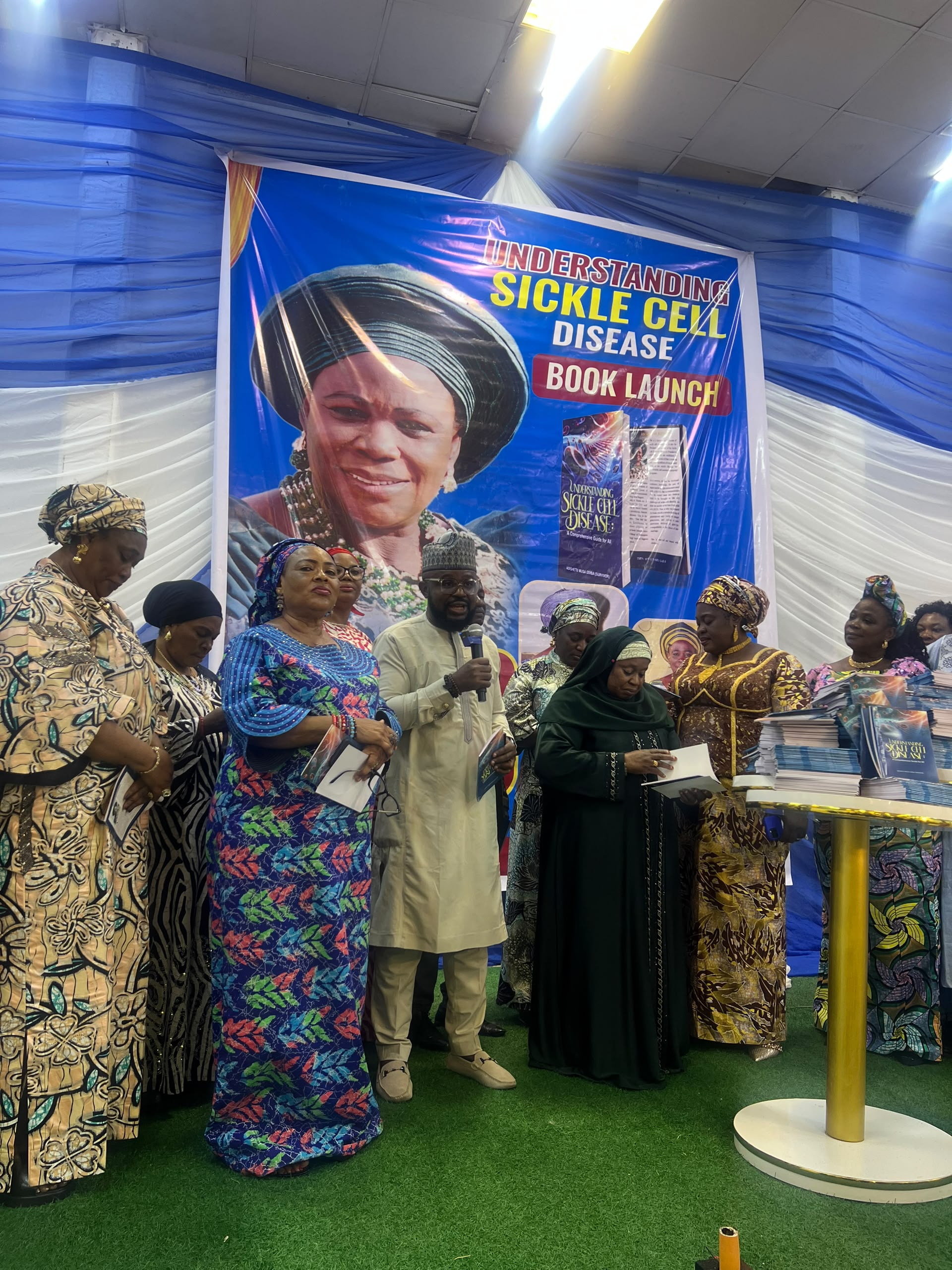

Chidinma Iroegbu and Esther Oseyiomon
Speakers at the launch of Understanding Sickle Cell Disease: A Comprehensive Guide for All, written by sickle cell survivor Aishetu Odiba, have called for wider genotype testing and stronger community awareness to reduce misconceptions about the condition.
HRH Hauwa Ibrahim Adamu, Wife of the Ona of Abaji and President of the FCT Traditional Rulers’ Wives Association, said traditional institutions could help take accurate information about sickle cell disease to communities and correct long-held misconceptions.
Adamu recalled that sickle cell was previously associated with witchcraft and other misconceptions in some communities, stressing the need for knowledge, compassion and proper care for people living with the condition.
Director, Reform Coordination and Service Improvement Department, FCTA, Jumai Ahmadu, described Odiba’s book as an important tool for education and advocacy, particularly because the author had turned her experience as a sickle cell survivor into a resource for others.
Ahmadu urged Nigerians to know their genotype before marriage, saying, “Even if you need to borrow money for your wedding, borrow money and ensure that you know your genotype.”
Former Deputy Director, Monitoring and Enforcement Division, Department of Development Control, FCTA, Nathaniel Atebije, said the book offered hope to families affected by sickle cell disease and commended Odiba for sharing her experience.
Atebije described the publication as a “baby” being born to bring “new hope,” “new life” and “greater survival” to people affected by sickle cell disease.
Ambassador Evelyn Onyilo, a former National Association of Women Journalists official, praised Odiba for using her experience as a survivor to educate others and encourage greater understanding of sickle cell disease.
Book reviewer and University of Abuja facilitator, Margaret Okolo, PhD, said the five-chapter book examines the medical, emotional, social and financial challenges associated with sickle cell disease, including stigma and discrimination.
Okolo also called for wider genotype testing, improved access to treatment and stronger community education, noting that people living in rural areas could benefit from mobile laboratories and awareness programmes. She cited the 25 per cent AA, 50 per cent AS and 25 per cent SS possibility for children of two AS carriers per pregnancy.