
By Chukwuemeka B. Eze
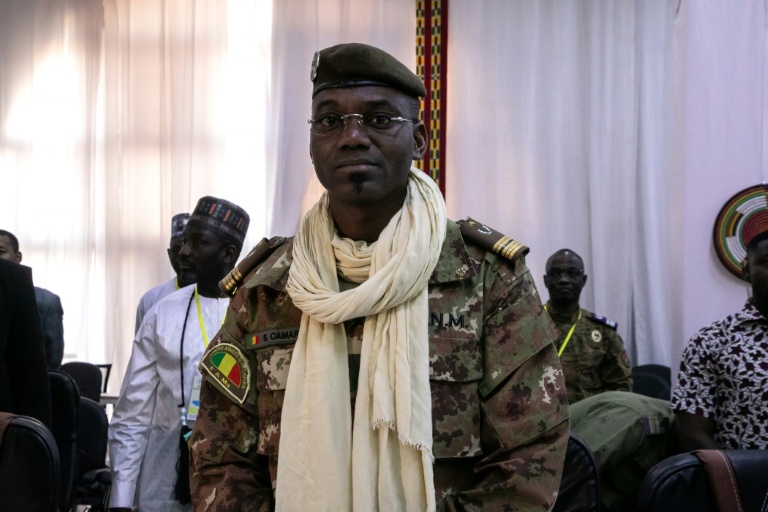
Mali’s crisis has entered a more dangerous phase not simply because of territorial losses, but because of what the recent assassination of Defence Minister Sadio Camara represents. It signals an erosion of the state’s inner core and raises a fundamental question: what is the cost of sovereignty without stability?
The coordinated April 2026 attacks, claimed by Jama’at Nusrat al-Islam wal-Muslimin (JNIM) alongside Tuareg separatist factions, were not routine insurgent operations. They were strategic, synchronized, and symbolically devastating. A car bomb struck Camara’s residence in Kati, killing him and members of his family, while parallel assaults targeted military installations, towns, and key infrastructure near Bamako.
This was more than a battlefield setback. It exposed three uncomfortable truths.
First, insurgents can penetrate even the regime’s most secure zones. Second, Mali’s heavy investment in alternative external security partnerships has not translated into resilience on the ground and third, the conflict is no longer peripheral but closing in on the political centre.
Mali is not merely stuck in a quagmire; it is approaching a tipping and uncomfortable point.
ECOWAS after Mali: irrelevant or indispensable?
Mali’s withdrawal from the Economic Community of West African States alongside Burkina Faso and Niger was framed by the junta as a reclaiming of sovereignty. In practice, it has narrowed Mali’s diplomatic and economic options at precisely the moment it needs them most. Yet withdrawal does not erase geography, interdependence, or shared security threats. If anything, ECOWAS matters now more than before, but its approach must evolve.
Jihadist groups do not recognize borders. The same networks destabilizing Mali are active across the Sahel and increasingly along the West African coast. Even outside formal membership, Mali can and must be integrated into regional intelligence-sharing, border monitoring, and counterterrorism coordination. A flexible “security compact” could serve as a starting point.
Economic realities reinforce this necessity. As a landlocked country, Mali depends heavily on coastal neighbours for trade corridors, port access, and energy supplies. ECOWAS states retain leverage not as a blunt instrument, but as a means of calibrated pressure and incentives. Keeping transit routes open while linking deeper economic cooperation to political progress may prove far more effective than blanket restrictions.
The stakes extend well beyond Mali. The April 2026 attacks including attempts to blockade Bamako and seize strategic northern towns signal a growing insurgent ambition to control territory and choke state authority. Should Mali’s instability deepen further, the contagion risk for countries such as Senegal, Côte d’Ivoire, and Ghana becomes acute.
Sanctions and suspensions have revealed their limits. Isolation has neither moderated Mali’s leadership nor improved security outcomes. Instead, it has hardened positions and accelerated a pivot toward alternative alliances. What is needed is a shift from punishment to conditional engagement: a pragmatic framework that offers pathways back into regional cooperation, tied to clear benchmarks, credible electoral timelines, humanitarian access, and structured security collaboration. ECOWAS therefore has not only a normative responsibility, but a clear strategic interest in re-engaging Mali.
The uncomfortable reality
There is no clean solution. Mali’s leadership mistrusts ECOWAS; ECOWAS mistrusts Mali’s leadership. External partners from Western interventions to newer security arrangements have yet to deliver decisive stability. Meanwhile, insurgent groups continue to adapt faster than state responses.
But the killing of Camara changes the equation. It underscores that the current trajectory, militarized governance, externalized security, and regional disengagement is not holding.
- The path forward lies in rebuilding overlapping layers of legitimacy:
- Domestic, through a credible and time-bound political transition;
- Local, through community-cantered approaches to security and governance;
- Regional, through pragmatic re-engagement with ECOWAS even outside formal structures.
Even without Concluding
Mali may have walked out of the Economic Community of West African States. But it cannot walk out of West Africa, its geography, its economy, and its security realities remain firmly tied to the region. Its borders are porous, its trade routes dependent, and its stability inseparable from that of its neighbours. Nor can West Africa afford the illusion of distance. What unfolds in Mali will not remain contained within its borders; it will ripple across the Sahel and into coastal states, testing already fragile institutions and stretching security capacities.
The choice, therefore, is not between engagement and disengagement. It is between proactive, pragmatic cooperation and reactive crisis management. Turning away may offer short-term political clarity, but it guarantees long-term instability. Engagement, however difficult, offers at least the possibility of shaping outcomes of preventing further state erosion, containing insurgent expansion, and preserving a pathway back to constitutional order.
Mali’s trajectory is now a regional stress test. It will reveal whether West Africa can adapt its institutions to new political realities, balance principles with pragmatism, and act collectively in the face of shared threats. The cost of failure will not be borne by Mali alone. It will be paid across the region in diminished security, weakened cooperation, and lost prospects for democratic recovery. In that sense, Mali is not just at a crossroads. It is a mirror reflecting both the vulnerabilities and the unfinished project of regional solidarity in West Africa.