
As another Nigerian is buried in Ukraine, Russia’s denials collapse under the weight of the dead
By Oumarou Sanou
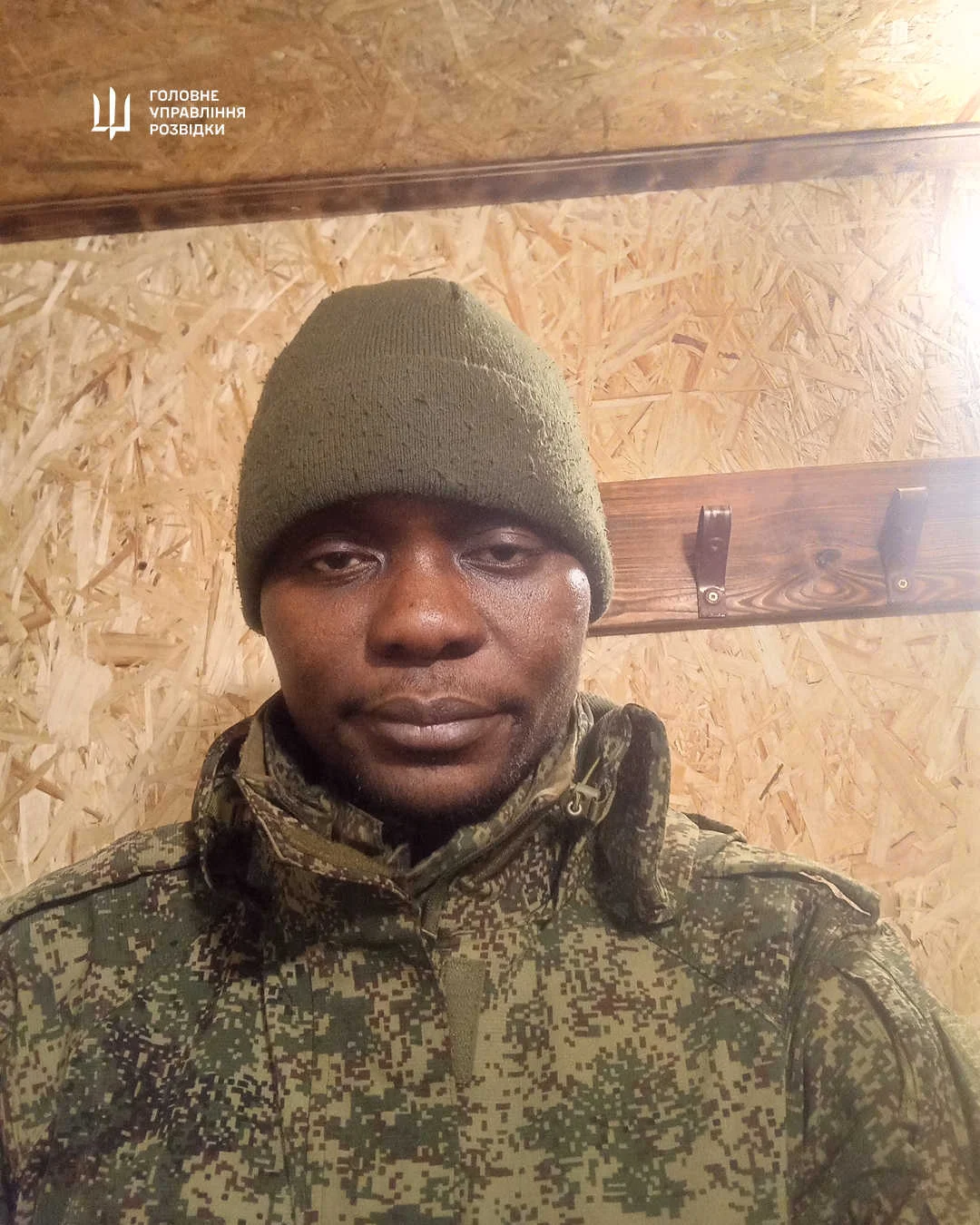
Another Nigerian has been killed in Ukraine, fighting for Russia. Ukraine’s Defence Intelligence identified him as Ayebusiwa Olabode Victor, born in 1992, a son of Ilutitun in Ondo State, who was killed near the settlement of Hrafske in the Kharkiv region. He had signed his mercenary contract in late February, barely a week after Nigeria’s Ministry of Foreign Affairs warned citizens against being lured into foreign wars. He did not heed the warning, or perhaps never saw it. Either way, he is now a statistic in a war he had no business dying in.
The death of any African abroad is a tragedy. This one is worse, because it comes amid Moscow’s flat insistence that no such thing is happening. And Victor is neither the first nor, sadly, the last. Before him, the bodies of two Nigerians were recovered in Luhansk. By Ukraine’s count, at least 215 Nigerians have signed contracts with the Russian Ministry of Defence, with no fewer than 25 already killed or missing. A wider investigation by INPACT, a group that tracks Russian disinformation in Africa, puts the figure at more than 1,400 Africans recruited between 2023 and 2025; Nigerians, Ghanaians, Kenyans, Ugandans and South Africans, of whom at least 316 have died on Ukrainian soil. These are not abstractions. They are sons, brothers and breadwinners.
All of this unfolds against the Kremlin’s denial that it recruits Africans at all. In December, in Accra, a Russian official insisted African students were “safe.” On February 10 this year, the Russian Ambassador to Nigeria, Andrey Podyelyshev, dismissed reports of recruitment as “misleading” and unrelated to his government. Yet casualties do not lie, and Moscow’s own propagandists tell a different story. Mikhail Zvinchuk, a pro-war commentator tied to the Russian defence ministry, has openly described the scheme on Kremlin-aligned television: fake job adverts on Facebook and WhatsApp, easy visas, one-way tickets, and employment that evaporates on arrival. Passports are confiscated “for processing.” Within days, the victim is broke, his visa cancelled, and offered a grim menu: deportation with debt, prison, or a contract with the army written in a language he cannot read.

The testimonies make the machinery horrifyingly concrete. Bankole Manchi, a 36-year-old mechanic from Lagos, says he was promised the equivalent of ₦500,000 a month and signed papers he did not understand. Routed through Addis Ababa to Moscow and handed to two strangers, he woke to a military camp filled with men from Nigeria, Ghana, Brazil and China, most of whom were unable to speak to one another. “Once you enter the camp, there is no going back,” he recalled. He left with a gunshot wound to the leg. A Ugandan, promised work in a supermarket, was marched to the front under armed guard before escaping toward Ukrainian lines. Here at home, the names accumulate: Adekunle Adaramola, a former Air Force man; Adam Anas; Akinlawon Tunde Quyuum; Abugu Stanley Onyeka; Balogun Ridwan Adisa, all baited with “security jobs,” all conscripted after three weeks of training, all dead. The details vary; the pattern never does.
This is not migration gone wrong. It is trafficking by design, and it wears the respectable mask of culture and cooperation. Investigators point to the so-called Russian Houses — cultural centres run under the state agency Rossotrudnichestvo — as nodes in this ecosystem. Cultural diplomacy is legitimate; every major power teaches its language and offers scholarships. But unlike the British Council or the Goethe-Institut, the Russian Houses operate under an opaque franchise model that allows private actors, some linked to Russia’s mercenary networks, to act in Moscow’s name while granting Moscow deniability. In Ghana, university partnerships allegedly accompanied the enlistment of 272 nationals, 55 of them now dead. When language classes and scholarships double as recruitment funnels, education itself has been weaponised.
Here lies the deeper hypocrisy. Russia has sold itself across Africa as the anti-imperial alternative to a West weighed down by colonial guilt, and its disinformation ecosystem — the same apparatus that pushed “For eight years they bombed Donbas!” and branded Ukraine’s leaders Nazis — has won real disciples here. But a power that grinds African boys into front-line fodder forfeits any claim to anti-imperialism. It is practising the oldest imperialism of all: treating other men’s lives as cheap and expendable. That the workforce sustaining Russia’s faltering offensive is increasingly African, even as North Korean troops withdraw and casualties mount, is no coincidence. It is procurement.
Yet the deepest vulnerability is ours, and it is not military. It is economic desperation. When legitimate pathways to a decent life are scarce, a promise of overseas work becomes almost impossible to refuse; what looks like hope to a family looks like opportunity to a recruiter. Russia, like every state, pursues its interests, international politics was never charity. The scandal is not that Moscow has interests, but that African lives are treated as expendable within them, and that African governments have largely met the dying with silence. The few official responses have been feeble, mixed and muted.
The lesson is larger than Russia. No external power: not Russia, not China, not Europe, not the United States, courts Africa out of altruism; each must be judged on transparency, reciprocity and tangible benefit. African states are entitled, indeed obliged, to pursue their own interests, beginning with the lives of their citizens. That means auditing these cultural centres, dismantling the recruitment pipelines, summoning Russian envoys to account, warning every job-seeker that Moscow’s “lucrative” offer is too often a death sentence, and, above all, building enough opportunity at home that the bait stops working. To keep looking away as the bodies return is to consent to a second slave trade conducted under a diplomatic flag. By the time we admit it, the denials will no longer matter.